The White Lady, Rock art site in Brandberg, Namibia
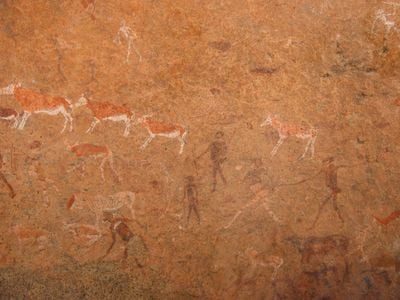
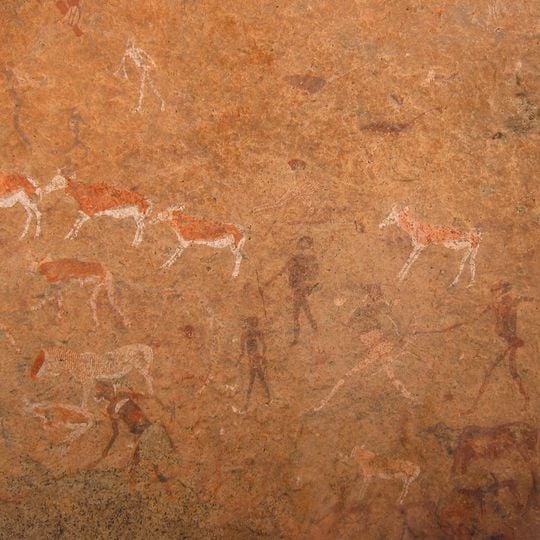
The White Lady is a rock painting sheltered within Maack Shelter on Brandberg Mountain and depicts human figures alongside antelope and other animals. The artwork spans several meters and uses natural pigments like white, red, and brown that were carefully applied to the stone.
The White Lady was first recorded in 1917 by German geologist Reinhard Maack, who copied the panel and described its main figure as a warrior. In 1929 Henri Breuil saw Maack's copies in Cape Town and argued for a Mediterranean, Knossos-like origin, naming it the white lady; he reached the site only in 1945. Later research identified a San painting, at least 2,000 years old.
The name "White Lady" was coined by French prehistorian Henri Breuil, who saw a Greek profile in the figure. The painting is now read as a male shaman or warrior, with hunting equipment and a faintly visible penis. The site lies in Maack Shelter, named after its 1917 discoverer Reinhard Maack.
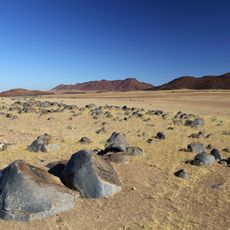
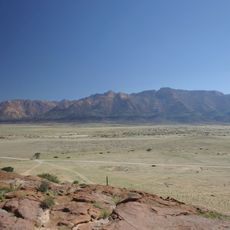
Visiting requires a 45-minute walk through a narrow gorge with a local guide who is familiar with the route. Sturdy walking shoes and water are helpful since the path crosses rocky terrain.
The figure was long read as a woman because of a vessel or lotus in its hands; the objects are now taken to be hunting gear, and a faded penis is visible, so it likely shows a male warrior or shaman. The name "White Lady" has stuck regardless.
The community of curious travelers
AroundUs brings together thousands of curated places, local tips, and hidden gems, enriched daily by 94,019 contributors worldwide.