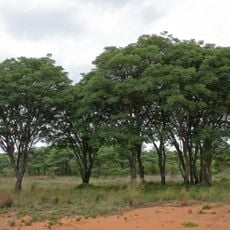
Loskop Dam, Dam and reservoir in Groblersdal, South Africa.
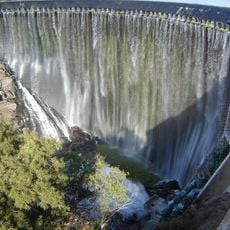
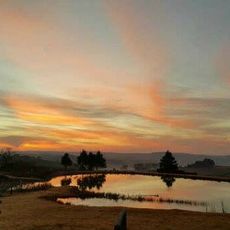
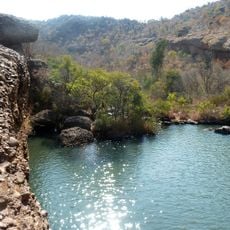
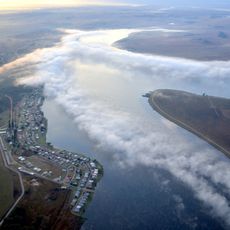
Loskop Dam is a combined gravity and arch dam on the Olifants River near Groblersdal, Mpumalanga. Its mass concrete wall stands 53 m high with a crest length of 511 m, impounding a reservoir of 360 million m³. The dam lies within Loskop Dam Nature Reserve and serves mainly for irrigation.
Loskop Dam was first proposed in 1905. Landowners along the Olifants River began a private irrigation scheme in 1930, and the government endorsed it in 1934. Construction started that year and was completed in 1939 by the Department of Irrigation at a cost of R5 million. Willem J. Grobler, on whose Klipbank farm the town of Groblersdal was founded in 1938, was a key figure. The wall was raised in 1979.
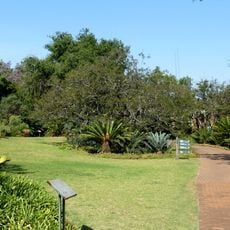
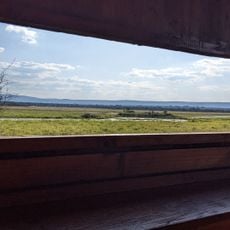
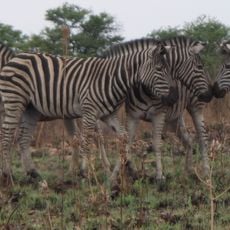
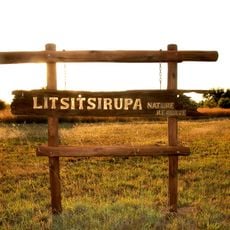
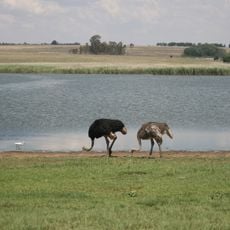
The reserve around the dam was proclaimed by the Transvaal Provincial Council on 6 March 1940 and covers 12,700 ha. It is a long-standing angling spot for Mozambique tilapia, redbreast tilapia, yellowfish, carp, mudfish and eel. Large game has been bred there since 1948, and two white rhinoceroses brought in 1963 produced a calf on 11 April 1964, returning a species extinct in the Transvaal since 1896.
Visitors can access fishing facilities, self-catering chalets, boat launches, and camping areas within the reserve, with irrigation canals extending 148 kilometers to support agriculture across 19,000 hectares of surrounding farmland.
The dam incorporates innovative breaker structures above its walls that divert floodwaters into controlled streams during heavy rainfall, reducing flood risks while maintaining optimal water storage levels.
The community of curious travelers
AroundUs brings together thousands of curated places, local tips, and hidden gems, enriched daily by 93,832 contributors worldwide.