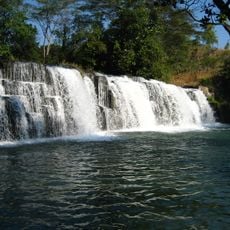
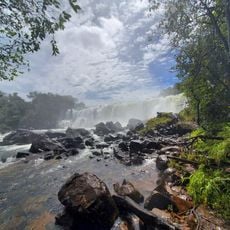
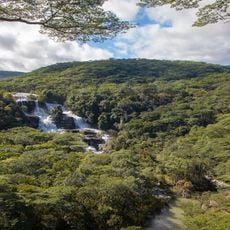
Kalambo Falls, Archaeological site and waterfall in Rukwa Region, Tanzania.
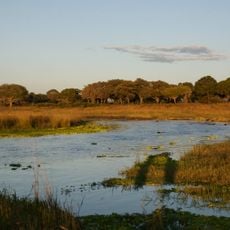
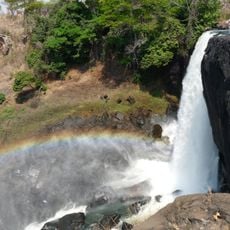
Kalambo Falls is a waterfall and archaeological site on the Kalambo River in Rukwa Region. The cascade drops steeply and marks the border between Tanzania and Zambia near Lake Tanganyika.
People have lived in this area for hundreds of thousands of years, with excavations revealing traces of continuous habitation. The remains show how human life and tool-making changed across different time periods.
The name Kalambo comes from the river itself. Excavations by J.D. Clark in 1953, 1956, 1959 and 1963 uncovered Late Acheulean stone tools, hearths, a wooden club and digging sticks, showing how tool-making shifted from Oldowan pebble flakes to specialised implements. The site is a protected national monument and on UNESCO's tentative list.
The best time to visit is during the dry season when trails are easier to navigate. A local guide can help you find your way and share knowledge about the landscape.
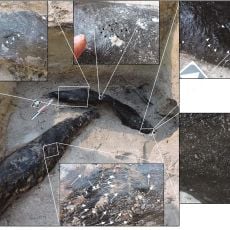
In 2023 researchers reported two interlocking wooden beams found at Kalambo Falls, dated to about 476,000 years ago and showing signs of burning used to shape them. The find predates Homo sapiens and is described as the earliest known hominid wooden structure.
The community of curious travelers
AroundUs brings together thousands of curated places, local tips, and hidden gems, enriched daily by 93,073 contributors worldwide.