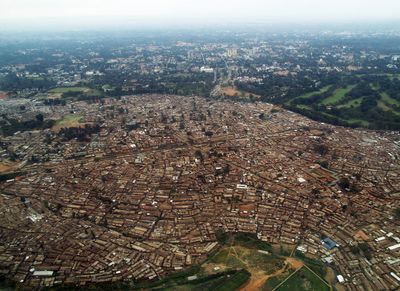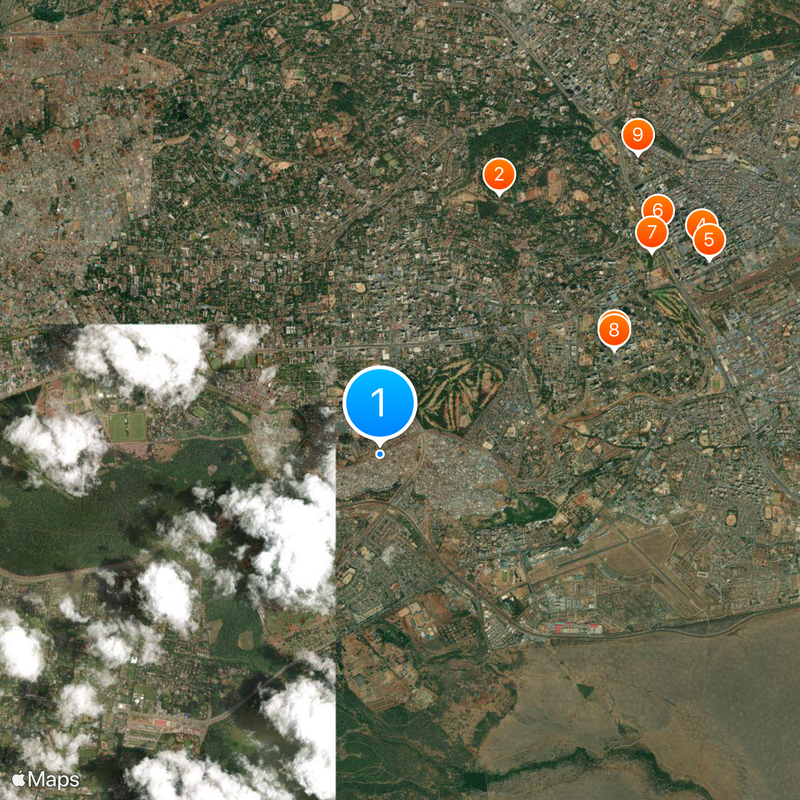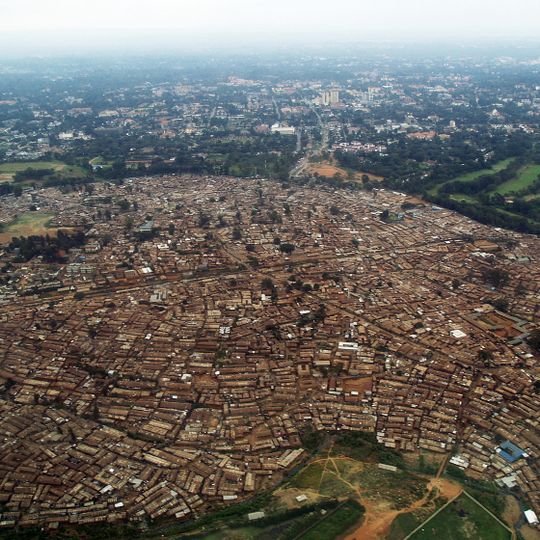
Kibera, Settlement area in Nairobi, Kenya.
Kibera spreads across an area with densely packed corrugated iron shacks and self-built shelters connected by a network of narrow paths. Open drainage channels run along many routes, while electrical wires stretch in all directions between the low roofs.
The first inhabitants settled after World War I when Sudanese soldiers received plots from the British military on the city outskirts. Over the following decades the settlement grew through internal migration from rural areas and became a permanent residential quarter without legal recognition.
The name comes from the Nubian language and means forest or jungle, though today few trees mark the area. Residents meet in narrow lanes at kiosks and small shops that serve as social meeting points and structure daily life.
Visitors should only walk through the area with recognized community initiatives and never alone, as many routes are poorly lit and difficult to navigate. Respectful clothing and restraint when photographing are important to preserve the privacy of residents.
A railway track divides the settlement in two and residents use it as a footpath even though trains pass through daily. Local artists paint individual house walls with colorful motifs that add color to the monotonous tin architecture.
The community of curious travelers
AroundUs brings together thousands of curated places, local tips, and hidden gems, enriched daily by 91,903 contributors worldwide.