Albany Fish Traps, Aboriginal fishing structures in Oyster Harbour, Western Australia
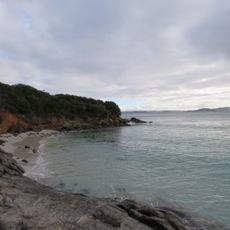
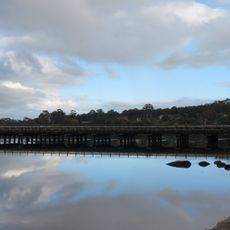
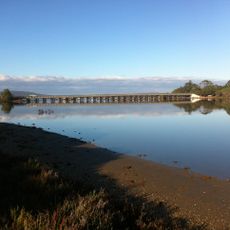
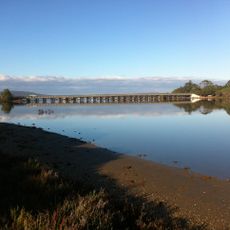
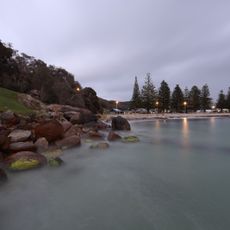
Albany Fish Traps are eight crescent-shaped stone weirs arranged along the northern shore of Oyster Harbour near the Kalgan River mouth. The structures were built using black lateritic stones found naturally on the shoreline.
The structures were built about 7,500 years ago by the Menang people. European explorers first recorded them when George Vancouver documented the site in 1791, with subsequent observations by Nicolas Baudin and Philip Parker King.
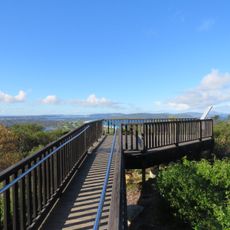
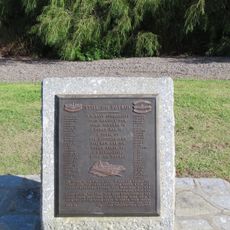
The Menang people created these stone walls thousands of years ago as a sophisticated fishing method using tidal flows to trap fish. Interpretation boards along the boardwalk today explain how this practice sustained the community.
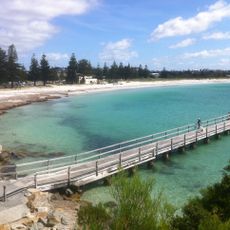
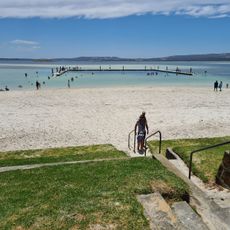
A newly built boardwalk with interpretative signs lets visitors get a clear view of the stone structures, particularly at low tide. The best time to visit is when the water is low so you can see the full construction of the weirs.
The stone structures demonstrate sophisticated knowledge of tidal patterns and fish behavior by the Menang builders. The black lateritic stones used were not brought from elsewhere but came from the shoreline itself, showing how the builders worked with what their environment provided.
The community of curious travelers
AroundUs brings together thousands of curated places, local tips, and hidden gems, enriched daily by 60,000 contributors worldwide.