Jatijajar Cave, Limestone cave in Kebumen, Indonesia
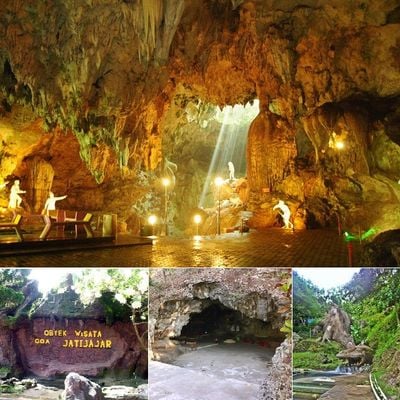
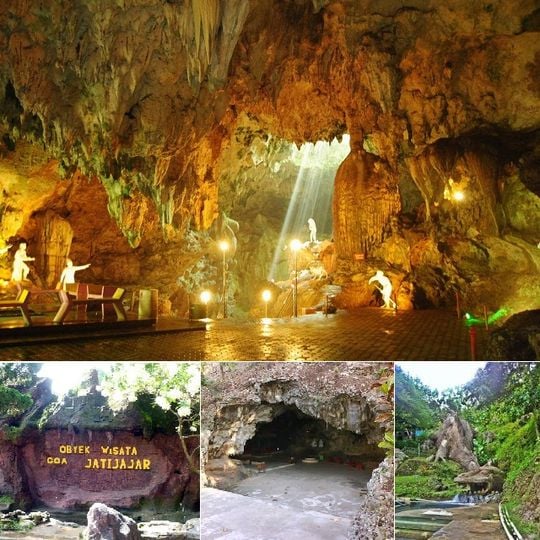
Jatijajar is a limestone cave in Ayah, Kebumen Regency, Central Java, Indonesia, that extends about 250 meters through several chambers. The passages wind through natural rock formations, and artificial lighting highlights the walls and ceiling throughout.
A farmer discovered the cave in 1802 when he fell through a vent into the underground system while collecting grass on the hillside above. The entrance was later enlarged and paths were added over the following decades to allow visitors inside.
The cave takes its name from two teak trees that stood side by side at the mouth when the regent of Ambal inspected the site after its discovery. Inside, 32 statues form eight dioramas of the Lutung Kasarung legend, which links the cave to Raden Kamandaka, a Pajajaran crown prince said to have meditated here.
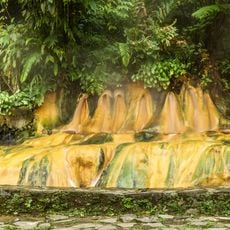
Concrete steps lead from the entrance down into the cave, and electric lighting runs throughout the developed sections. The Jombor and Puser Bumi springs remain unlit and slippery, and visitors reach them only with the caretaker's permission. The Mawar and Kantil springs are the two that have been built up for visitors.
The dinosaur statue at the mouth of the cave is fed by the Kantil and Mawar springs, which never run dry and supply irrigation water to the rice fields of Jatijajar village. The cave's limestone is so old that a stalactite grows only about one centimetre per year.
The community of curious travelers
AroundUs brings together thousands of curated places, local tips, and hidden gems, enriched daily by 93,403 contributors worldwide.