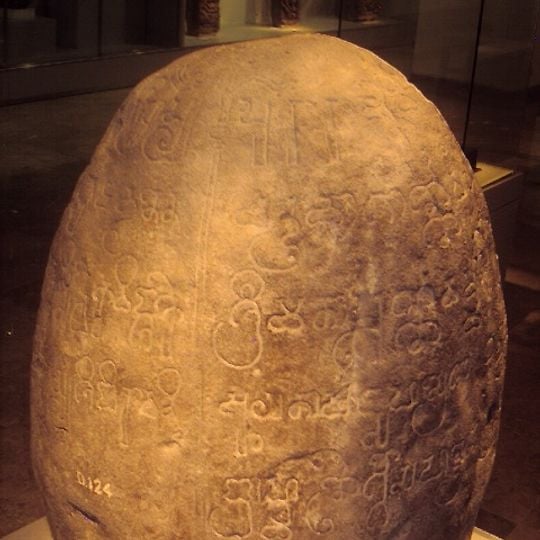
Tugu inscription, Ancient stone inscription in Central Jakarta City, Indonesia.
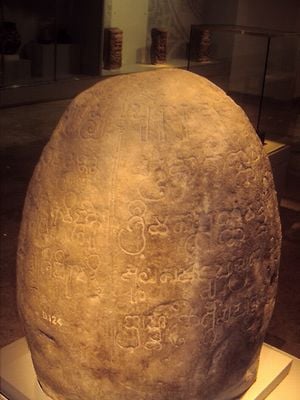
The Tugu inscription is a rounded stone about one meter tall with five lines carved in Pallava script. The text was written in Sanskrit and now rests in the National Museum of Indonesia, where it is kept under controlled conditions.
The stone dates from the mid-5th century and documents projects in which two waterways were altered. A ruler named Purnawarman had this work carried out during his reign and recorded on the stone.
The stone carries the name of a king who cared for irrigation canals and recorded this work in a language used during ceremonial occasions at that time. The script shows how rulers on Java were familiar with South Indian traditions and adopted them for official records.
The stone is housed in the National Museum of Indonesia, where visitors can view it in a climate-controlled gallery. The surface is lit softly so the carved letters become easier to see while preservation is maintained.
Between the sentences on the surface appears the image of a staff with three points, which holds special meaning in Hinduism. This mark repeats several times and helped readers separate the sections of text without using extra words.
The community of curious travelers
AroundUs brings together thousands of curated places, local tips, and hidden gems, enriched daily by 91,364 contributors worldwide.