Menara Kudus Mosque, Mosque in Kudus, Indonesia
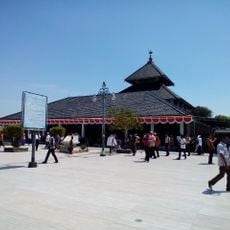
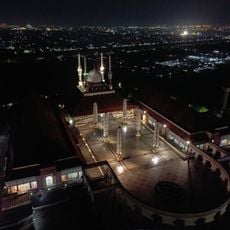
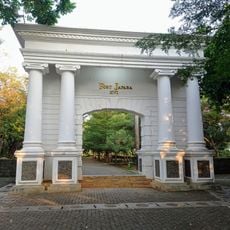
Menara Kudus Mosque is a place of worship in Kudus, Java, that connects a central prayer area with surrounding courtyards. Red brick walls enclose the entire complex and frame several gateways in Javanese style.
Sunan Kudus, one of Java's nine Islamic saints, founded the mosque in 956 AH (1549 AD), as recorded in an Arabic inscription on a stone plaque in the mihrab. The first stone came from Baitul Maqdis in Jerusalem, giving the mosque its name Al-Aqsha. The building has been rebuilt several times, and the peaked roof dates from a 1920s renovation with terracotta tiles and glass windows between the tiers.
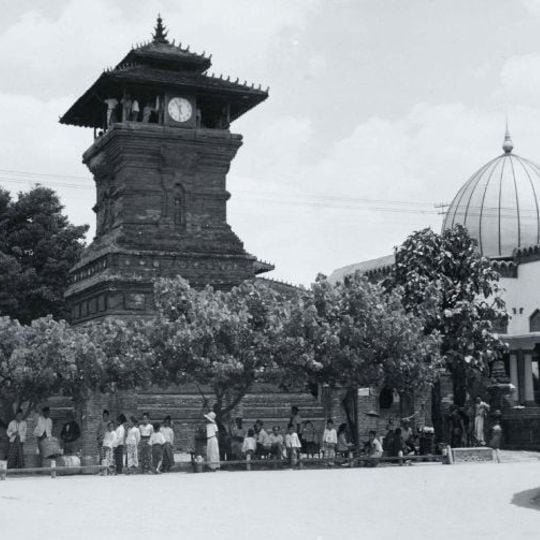
The drum in the tower is a bedug, struck to summon worshippers instead of a muezzin's call; elsewhere in Java it hangs under a veranda, here it sits in a tower like a Balinese temple signal drum. Eight ablution spouts in the courtyard carry kala heads, a number read as the Buddhist Eightfold Path. During Dhandhangan, held before Ramadan, the mosque becomes the centre of the festival.
The site welcomes visitors every day from early morning until late evening, with modest clothing expected. Those wishing to visit the tomb can use a separate entrance on the eastern side of the complex.
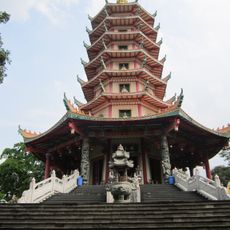
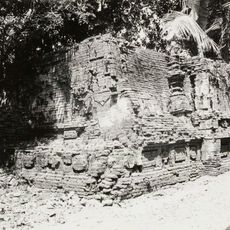
The minaret tower shows an unusual shape that resembles Hindu temples more than typical Islamic towers. This design reflects a time when Javanese craftsmen built religious structures according to local traditions.
The community of curious travelers
AroundUs brings together thousands of curated places, local tips, and hidden gems, enriched daily by 92,782 contributors worldwide.