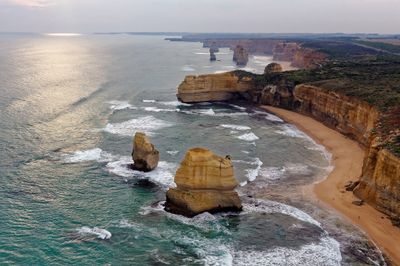
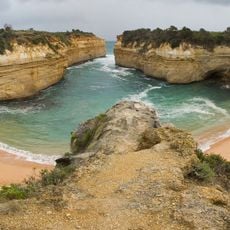
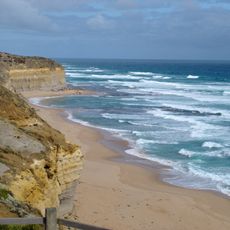
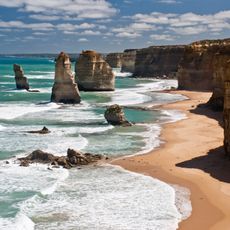
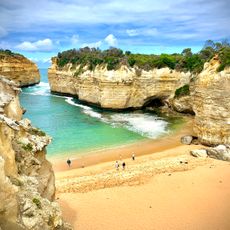
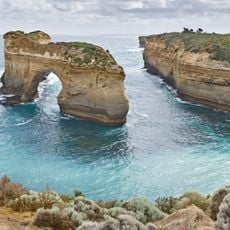
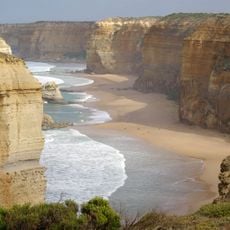
The Twelve Apostles, Limestone rock formations at Port Campbell National Park, Australia.
The Twelve Apostles are limestone pillars on the southern coast of Victoria, roughly two hours by car west of Melbourne along the Great Ocean Road. The seven remaining pillars rise between 45 and 50 meters (148 and 164 feet) above sea level and show horizontal layers of yellow and gray stone shaped by waves and salt water.
The rocks formed about 10 to 20 million years ago from fossilized sea mud and were shaped into pillars by waves and wind. The old name Sow and Piglets was replaced in the 1920s with the current name when the government promoted the coastal road.
The name was chosen in the 1920s to attract more visitors, even though twelve separate stacks were never visible at once. Today many travelers use the viewing platforms at sunrise and sunset, when the light turns the ochre cliffs into warm tones.
The main viewing platform is a short walk from the car park and wheelchair accessible, with paths made of concrete and wood. Mornings and late afternoons offer quieter hours and soft light for photography, while fog is common and can limit visibility.
An eighth pillar called Island Archway collapsed in June 2009, leaving only two low stumps in the water. Some of the pillars stand more than 20 meters (66 feet) from the cliff and have separated completely from the mainland.
The community of curious travelers
AroundUs brings together thousands of curated places, local tips, and hidden gems, enriched daily by 60,000 contributors worldwide.