Taupō Volcano, Dormant volcano in North Island, New Zealand
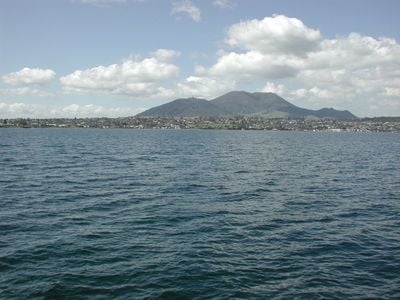
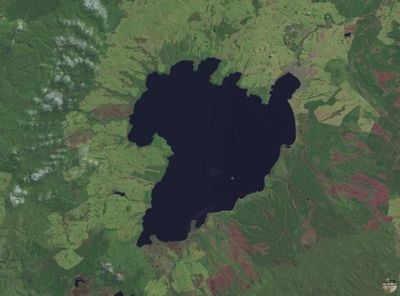
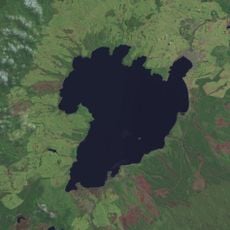
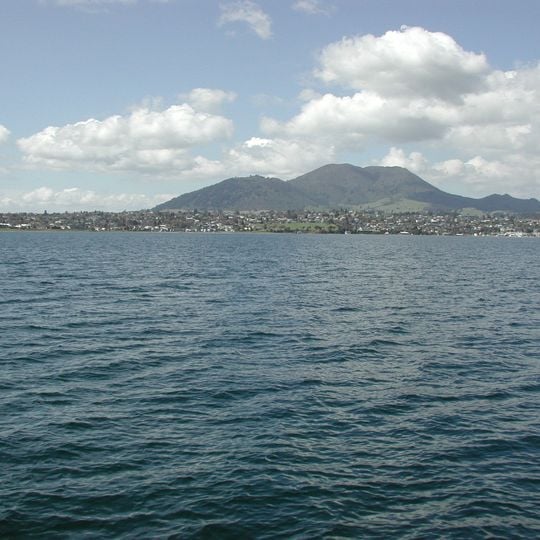
Taupō Volcano is a rhyolitic supervolcano whose caldera holds Lake Taupō on New Zealand's North Island; the volcano itself is no longer visible as a mountain and continues beneath the lake's northern half. The Oruanui eruption about 25,500 years ago collapsed the magma chamber by roughly 500 m, creating the caldera that the lake partly fills. The lake drains north through a gap where the Huka Falls drop about 11 m.
Taupō Volcano began erupting about 300,000 years ago. The Oruanui eruption around 25,500 years ago, the largest known in the past 70,000 years, collapsed the magma chamber and formed the caldera that now holds the northern part of Lake Taupō. The Hatepe eruption of about 232 CE was the most powerful in the world in the last 5,000 years; its ash fell across New Zealand and may explain red sunsets recorded in China and Europe.
The lake carries the name Taupō-nui-a-Tia, honoring the navigator Tia who sailed from the ancestral Polynesian homeland. Local communities live along its shores and maintain a careful respect for its waters and surrounding land.
Visitors can explore the area through public paths and park areas along the lakeshore that remain accessible throughout the year. GeoNet provides current information about seismic and geothermal conditions in the region.
The Hatepe eruption of about 232 CE left at least a 1 cm ash layer over all of New Zealand, and its red sunsets were recorded by Roman and Chinese observers. The Oruanui eruption 25,500 years ago was the world's largest in 70,000 years, rated 8 on the Volcanic Explosivity Index.
The community of curious travelers
AroundUs brings together thousands of curated places, local tips, and hidden gems, enriched daily by 92,674 contributors worldwide.