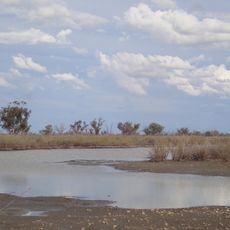
Cuddie Springs, Archaeological excavation site near Carinda, Australia
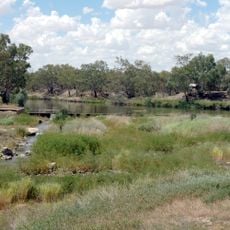
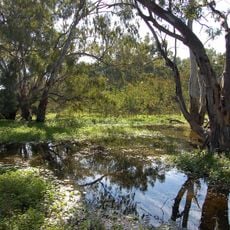
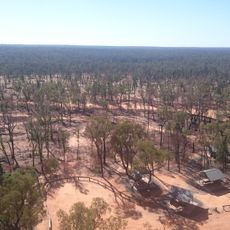
Cuddie Springs is an archaeological excavation site near Carinda containing fossilized bones and stone artifacts preserved within a circular claypan that was once part of an ancient shallow lake. The site spans across a large area with distinct layers showing evidence from different periods.
The site was discovered in 1876 when the Yeomans family dug a well and uncovered the first remains. Major excavation work began in 1933 when the Australian Museum started systematic investigation and documentation efforts.
The name comes from Aboriginal language, referring to the alkaline water that naturally occurs here in New South Wales. Visitors can observe how the site's water conditions shaped its meaning for the people who lived in this region.
The site fills with water after local rainfalls, so plan a visit during drier months when the excavation areas are more accessible. The best time to visit is during periods of low rainfall when conditions remain most stable.
Excavations have revealed spearheads and bones of extinct large animals dating back about 36,000 years, showing how early people and megafauna interacted. This combination of finds is rare and provides insight into daily life during that distant time.
The community of curious travelers
AroundUs brings together thousands of curated places, local tips, and hidden gems, enriched daily by 90,791 contributors worldwide.