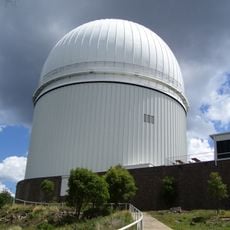
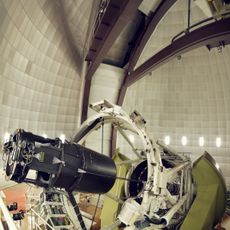
Uppsala Southern Schmidt Telescope, Optical telescope at Siding Spring Observatory, Australia
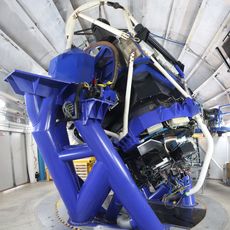
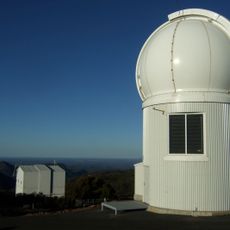
The Uppsala Southern Schmidt Telescope is an optical instrument with a wide-angle survey camera, featuring a 0.5-meter lens positioned at high elevation in New South Wales. This setup allowed researchers to capture extensive photographic records of the southern sky, including views of the Milky Way and Magellanic Clouds.
The instrument was relocated to Siding Spring Observatory in 1982 to escape light pollution that had begun affecting earlier observation sites. This move to a remote, elevated location helped restore optimal conditions for observing the southern sky.
This telescope contributed to early observations of space exploration milestones and continues to represent humanity's effort to map the southern skies. Such work reflects how observatory sites in this region became important for advancing our understanding of the cosmos.
The site is located at a high elevation on a remote plateau, so expect mountain conditions and variable weather when visiting. Clear nights are ideal for viewing, and checking with local information centers or scheduling a tour in advance helps ensure safe access and a meaningful experience.
This instrument captured the first photographic images of Sputnik 1 in 1957, making it a witness to a pivotal moment in the history of space exploration. It also played a role in discovering a comet that remained the brightest observed for over four decades afterward.
The community of curious travelers
AroundUs brings together thousands of curated places, local tips, and hidden gems, enriched daily by 91,198 contributors worldwide.