Talgai Homestead, Heritage homestead in Allora, Australia.
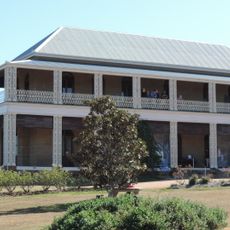
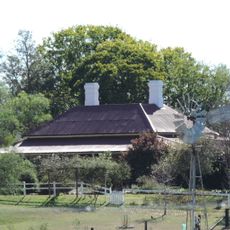
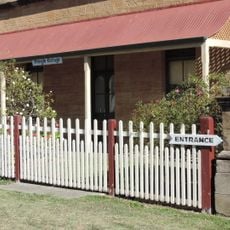
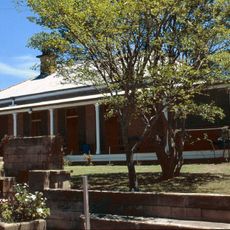
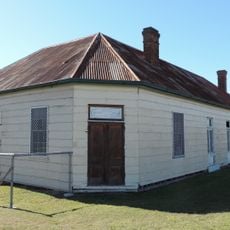
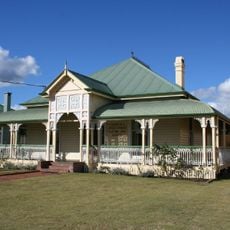
Talgai Homestead is a sandstone residence of sixty squares built in 1868, with an original shingle roof and verandahs of hand- and pit-sawn spotted gum, plus cedar doors and architraves. Its kitchen was attached to the main house, unlike the usual design of the period. A stone building near the entrance, apparently built as a residence for architect Richard George Suter and his wife during construction, later served as a storehouse and station storekeeper's residence.
Richard George Suter designed this residence in 1868 for pastoralist George Clark, marking the period of early European expansion into the Darling Downs region. The building stands as a symbol of how wealthy landowners established major estates during this settlement phase.
The homestead shows how wool farming shaped Queensland through its building style and the way the property was organized for agricultural work. The structures around it reflect the importance of large estates to early European settlement in this part of Australia.
The homestead is a private residence owned by the Nioa family and is not open to visitors, so the buildings and grounds can only be seen from the public road. The site lies east of the Toowoomba–Warwick rail line, on the eastern part of the old Talgai run. The stone building near the entrance, built as quarters for architect Richard George Suter during construction, later served as a storehouse and station storekeeper's residence.
The stone building near the entrance was reportedly built as a residence for architect Richard George Suter and his wife during construction of the homestead and its huge woolshed. It later served as a storehouse and home for the station storekeeper.
The community of curious travelers
AroundUs brings together thousands of curated places, local tips, and hidden gems, enriched daily by 94,365 contributors worldwide.