Nepal Peace Pagoda, Buddhist temple in South Bank, Brisbane, Australia
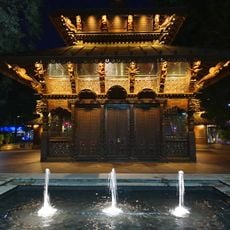
The Nepal Peace Pagoda is a three-level timber pavilion modelled on the Pashupatinath Temple in Kathmandu, with a tea house on the second level, two smaller side pavilions, a stupa and a peace bell. Its carved elements were made from 80 tonnes of Nepalese timber, and Sanskrit prayers and the syllable om are inscribed on the eaves and above the central door.
The pagoda was built for World Expo 88, using around 80 tons of timber worked by 160 Nepalese families over two years before the pieces were shipped to Australia. After the Expo closed, the structure was kept in place and became a permanent part of South Bank Parklands.
The ground floor holds a statue of Avalokiteshvara, the Buddhist deity of compassion, surrounded by both Buddhist and Hindu symbols carved into the interior walls. This side-by-side presence of two faith traditions is rare and easy to notice as you walk through the space.
The pagoda stands at the riverfront of South Bank Parklands, on the former World Expo 88 site, and is managed by South Bank Corporation. Visitors can sit on the church pews on the internal first level for personal meditation. The structure is occasionally closed to the public for weddings, book launches and company events, so check before planning a quiet visit.
This building is one of only three Nepalese temples built outside Nepal, making it a rare example of this craft tradition found abroad. What makes this even more notable is that it was originally conceived as a temporary exhibition pavilion, not a permanent place of worship.
The community of curious travelers
AroundUs brings together thousands of curated places, local tips, and hidden gems, enriched daily by 92,775 contributors worldwide.