Carnarvon Gorge, Sandstone gorge in Queensland, Australia.
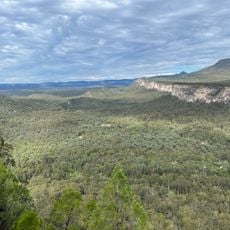
Carnarvon Gorge is a 30-kilometre sandstone gorge in Carnarvon National Park, about 593 km northwest of Brisbane. At its mouth it is roughly 600 metres deep. Carnarvon Creek has cut through six hundred metres of stone, exposing Precipice Sandstone cliffs above the impermeable Moolayember Formation, with basalt boulders from the Buckland Volcanic Province strewn along the waterway.
The gorge became known to Europeans in the 1840s when explorers documented the region, bringing attention to the area. Indigenous peoples had inhabited and shaped this landscape for thousands of years before that contact occurred.
The lower ten kilometres hold Indigenous cultural sites and rock art, including the Art Gallery, a sandstone wall covered with ochre stencils and engravings. Dreamtime stories describe the Rainbow Serpent making the gorges and living in their permanent waterholes. Researchers disagree on whether Aboriginal people lived in the gorge permanently, some citing defensive concerns and scarce food, others that it was sacred.
A 10 km track runs into the gorge from its mouth, with side diversions to the Art Gallery, Wards Canyon, the Amphitheatre and the Moss Garden. Boolimba Bluff, the Rockpool, Mickey Creek Gorge and the Nature Trail start near the entrance; Baloon Cave has been closed since bushfire damage in December 2018. Longer remote routes such as Battleship Spur suit experienced walkers.
Wards Canyon, one of the side gorges off the main 10 km track, holds a stand of large tree ferns that survives in its shaded, damp microclimate. The gorge lies within the lower ten kilometres of Carnarvon Gorge, where rock art sites, narrow sandstone canyons and relict rainforest vegetation sit close together.
The community of curious travelers
AroundUs brings together thousands of curated places, local tips, and hidden gems, enriched daily by 94,036 contributors worldwide.