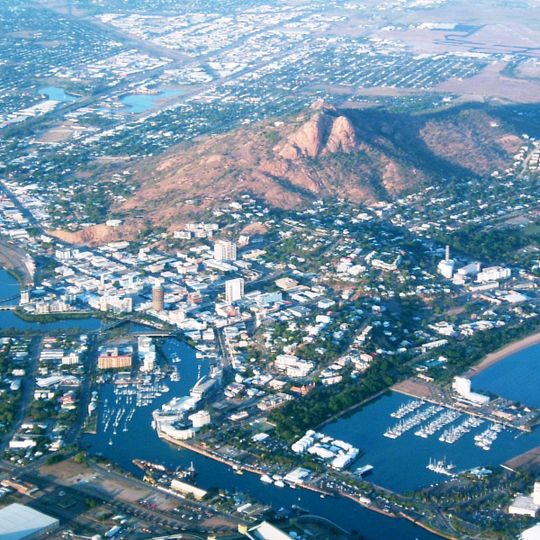
Castle Hill, Granite summit in Townsville, Australia
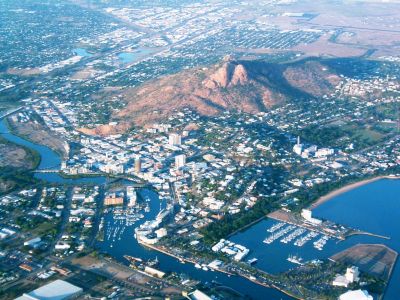
Castle Hill is an isolated pink granite monolith rising 286 metres above sea level in Townsville, Queensland. It has three peaks; Castle Hill Road winds 2.6 kilometres from the northeast slopes to the second peak, where the Hynes Lookout platform stands. A 1942 concrete observation post sits on the northernmost peak, and a large graffiti of 'The Saint' is painted on the northern cliff face.
The granite formed over millions of years through erosion and became a landmark when European settlers arrived in the area in the 1800s. During World War II, military observation posts were set up at the top to watch over the Queensland coast.
The hill's Indigenous name, Cootharinga, survives as one of only two known Australian Indigenous place names in the Townsville region, the other being Pallarenda. The name has also been recorded locally as Cutheringa, Cudtheringa and Mt Cutheringa. The Aboriginal history associated with Cootharinga has not been recorded.
The summit can be reached by car from the northeast side, and walking paths also lead up from the city center below. The granite surface can get slippery when wet, so sturdy footwear is a good idea before heading out.
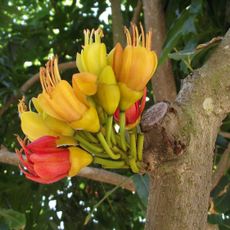
Despite sitting in the middle of a city, this rock shelters hundreds of native plant species, among them rare orchids that grow directly on the stone surface. Visitors who slow down and look closely into the cracks and crevices of the rock will find a world of small plants that most people walk past.
The community of curious travelers
AroundUs brings together thousands of curated places, local tips, and hidden gems, enriched daily by 93,677 contributors worldwide.