Bagana, Active stratovolcano in Bougainville Island, Papua New Guinea
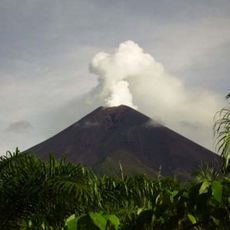
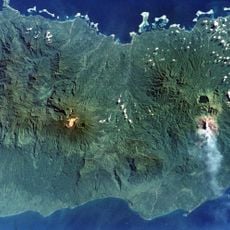
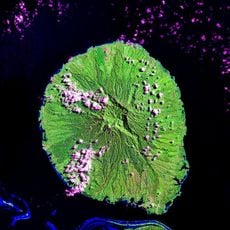
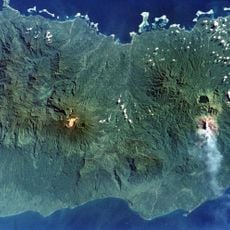
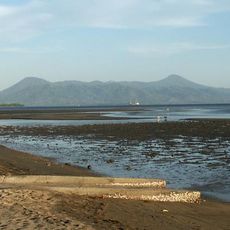
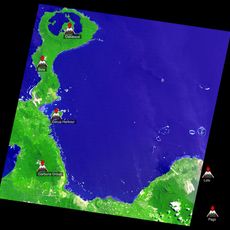
Bagana is a roughly 1,893-metre lava cone in the Emperor Range, central Bougainville Island, built from viscous andesitic flows. Its summit crater holds a small lava dome, and tongue-shaped lobes up to 50 m thick with prominent levees descend all flanks. The cone may have formed in about 300 years at its present lava output.
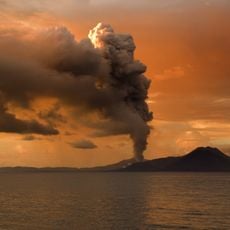
Bagana's first eruption seen by Europeans occurred on 15 March 1842. Twenty-four eruptions followed, 19 of them in the 20th century; the current eruption began on 16 September 2000. Most rate 2 to 3 on the volcanic explosivity index, except the February to October 1952 eruption, which reached 4.
The name Bagana also appears as Bogana in French sources. The cone rises in the Emperor Range, between the Billy Mitchell crater lake to the north-east and the coastal plain of Empress Augusta Bay to the south-west, both named during colonial exploration of Bougainville.
Visiting this volcano requires special permits and coordination with local authorities due to its remote location and ongoing activity. Proper preparation and experienced guides are essential for safe access to the area.
Bagana is one of 17 post-Miocene stratovolcanoes on Bougainville, and its whole cone may have been built in roughly 300 years at the current rate of lava output. The summit crater holds a small lava dome, and just north-east lies the crater lake Billy Mitchell.
The community of curious travelers
AroundUs brings together thousands of curated places, local tips, and hidden gems, enriched daily by 92,744 contributors worldwide.