Dakataua, Volcanic caldera on Willaumez Peninsula, Papua New Guinea
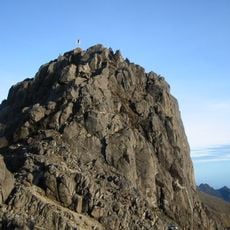
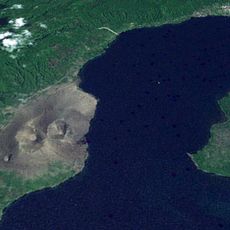
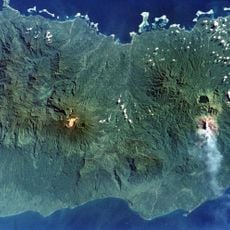
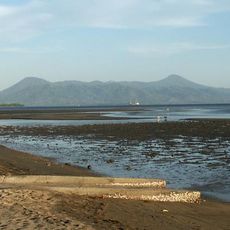
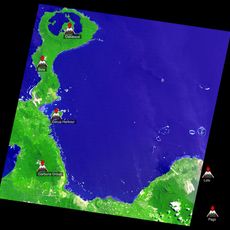
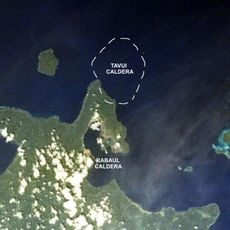
Dakataua is a volcanic caldera on the Willaumez Peninsula, shaped by a horseshoe-formed lake at its center. The basin was created by volcanic collapse and is now surrounded by steep walls that rise from the water's edge.
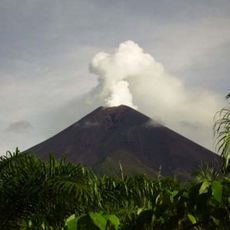
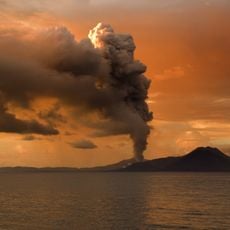
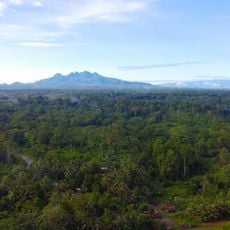
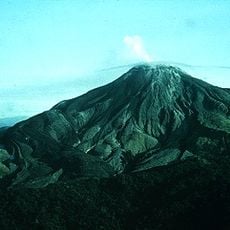
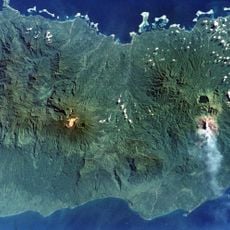
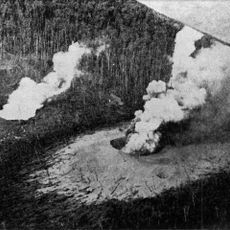
Dakataua's caldera formed around 800 CE (±50 years) in a plinian eruption rated 6 on the volcanic explosivity index, which ejected about ten cubic kilometres of tephra, comparable to Pinatubo in 1991. The emptied magma chamber made the summit collapse under its own weight, leaving rims barely 400 m high. At least five later eruptions built a peninsula from the south, largely through Mount Makalia, and the latest activity around 1895 formed three scoria and ash cones and sent a lava flow east from Makalia, still visible as a contrast in the dense vegetation.
The lake is said to be home to a creature called the migo, also known as masali. In 1993 a Japanese film crew led by Tetsuo Nagata filmed what they claimed was the migo; the animal in the footage is thought to be a saltwater crocodile from the surrounding ocean. The lake holds no fish.
The caldera lake lies about 76 m above sea level and is reached overland from the Willaumez Peninsula; the rim of Mount Makalia rises only about 350 m, so the climb is short but through dense vegetation. The lake is alkaline, with a pH of up to 8.2, and holds no fish. Saltwater crocodiles from the surrounding ocean are presumed to enter the water, so keep back from the shore.
A folk legend holds that a creature called the migo, or masali, lives in the lake. In 1993 a Japanese film crew led by Tetsuo Nagata filmed what they claimed was the migo; the animal is presumed to be a saltwater crocodile from the surrounding ocean.
The community of curious travelers
AroundUs brings together thousands of curated places, local tips, and hidden gems, enriched daily by 93,603 contributors worldwide.