Kamakahonu, Royal residence in Kailua Bay, Hawaii, US.
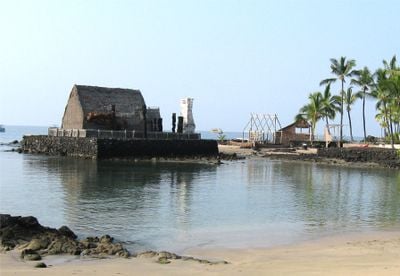
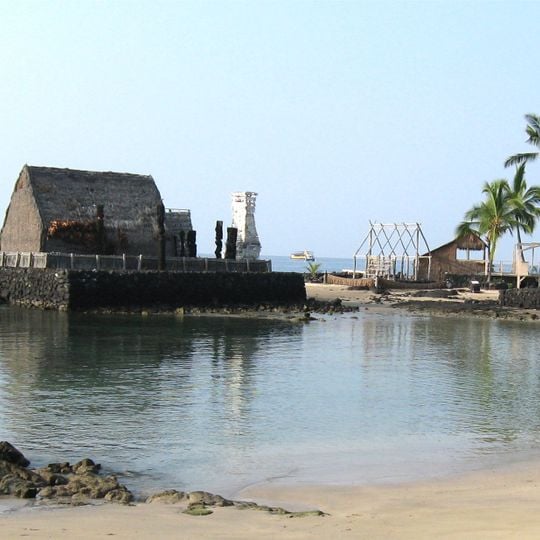
Kamakahonu sits at the north end of Kailua Bay, where a long, low building with a steep grey-brown thatch roof and dark stone walls stands behind a dark stone platform. A low wooden fence runs along the platform, and to the right a tall, pale, weathered stone pillar with a rounded top is flanked by dark upright wooden posts. The reconstructed ʻAhuʻena heiau is visible but not open to entry.
Kamehameha I lived at Kamakahonu during the last years of his reign, 1810–1819, and died here in 1819. His son Liholiho, who became Kamehameha II, also resided in the compound, which was protected by a battery of 18 cannons and large stone walls. In December 1819 Kalanimoku led an army from here to the Kuamoʻo Battle against the rebel Kekuaokalani.
The compound's personal shrine was ʻAhuʻena heiau, whose name means "temple of the burning altar" in Hawaiian. It was reconstructed in the 1970s and can be viewed but not entered. The point to the north, Kūkaʻilimoku, was named for the war god Kū honored by Kamehameha I and now holds the Kailua lighthouse.
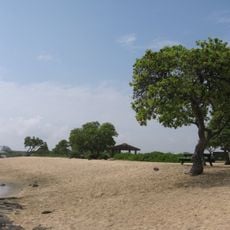
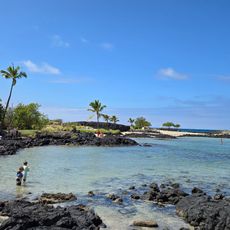
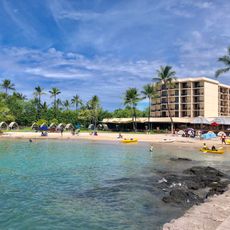
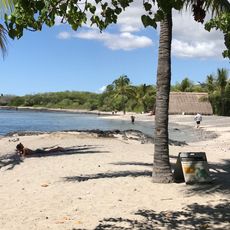
Kamakahonu lies at the north end of Kailua Bay, on the grounds of the Courtyard Marriott King Kamehameha's Kona Beach Hotel. ʻAhuʻena Heiau, rebuilt in the 1970s, can be viewed but not entered. A feather cloak and helmet (mahiole) are displayed in the hotel lobby. The small sandy beach is used for launching canoes and for children swimming.
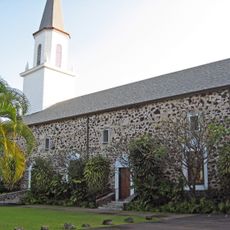
The first Christian missionaries to reach Hawaii landed at this location in 1820, bringing a new religion that fundamentally changed island society. This arrival marked a turning point when traditional Hawaiian practices and beliefs had to be reconsidered.
The community of curious travelers
AroundUs brings together thousands of curated places, local tips, and hidden gems, enriched daily by 93,578 contributors worldwide.