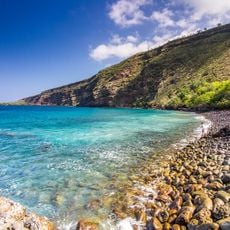
Hualālai, Shield volcano in Hawaii County, United States
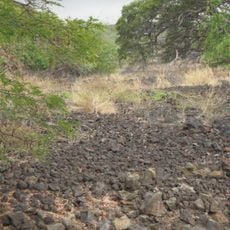
Hualālai is a broad shield volcano rising to 2,521 m, the westernmost of the five volcanoes on the island of Hawaiʻi. Its summit has no caldera, only a collapse crater about 0.48 km across atop a small lava shield, and three rift zones carry over 100 cinder and spatter cones. Most of the surface is alkalic basalt lava; trachyte occurs only at Puʻu Waʻawaʻa, a 372 m cone north of the summit.
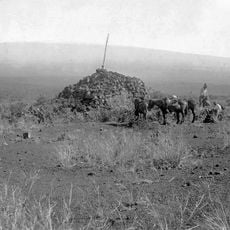
Hualālai rose above sea level roughly 300,000 years ago and entered its post-shield stage about 100,000 years ago, when pumice and trachyte eruptions built Puʻu Waʻawaʻa. It has erupted only three times in the last 1,000 years, most recently in 1801, when lava from the Huehue flow reached the coast near Keahole, 11 km north of Kailua-Kona. In 1929 an earthquake swarm lasting over a month shook the volcano, probably from magma rising near the summit.
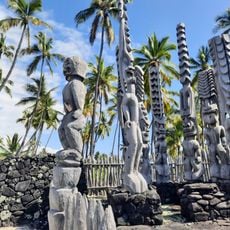
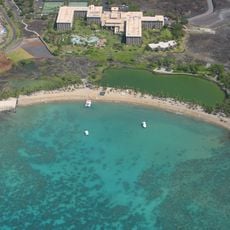
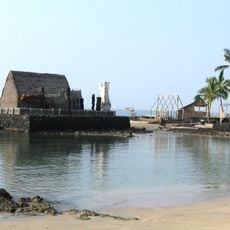
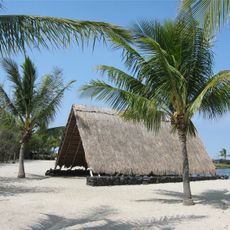
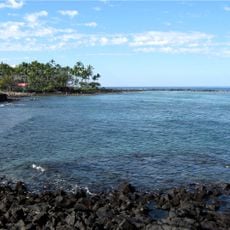
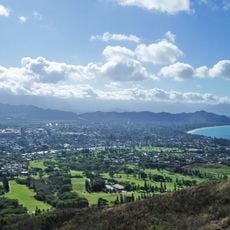
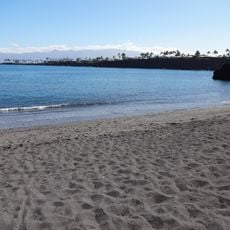
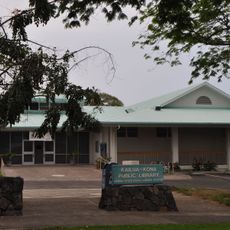
The name Hualālai is Hawaiian. Its western coast held several royal complexes before recorded history, and Kailua-Kona, built on the southeast slope, grows the Kona coffee the town is known for. Vacation resorts now stand on historic lava flows along that coast, beside a National Historical Park.
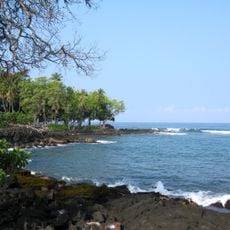
The area is dry and exposed, so bring water and sun protection for any visit. Wear sturdy shoes because the lava fields are uneven and have sharp edges.
Puʻu Waʻawaʻa, a cone 372 m tall and over 1.6 km across north of the summit, is built of trachyte, a silica-rich lava (over 62%) found on no other volcano of the island. Its slow flows began with a pumice eruption a little over 100,000 years ago and built the Puʻu Anahulu ridge. Hualālai's lavas also carry large xenoliths of mantle rock.
The community of curious travelers
AroundUs brings together thousands of curated places, local tips, and hidden gems, enriched daily by 93,950 contributors worldwide.