Puʻuhonua o Hōnaunau National Historical Park, Ancient Hawaiian sanctuary in Hawaiʻi County, United States.
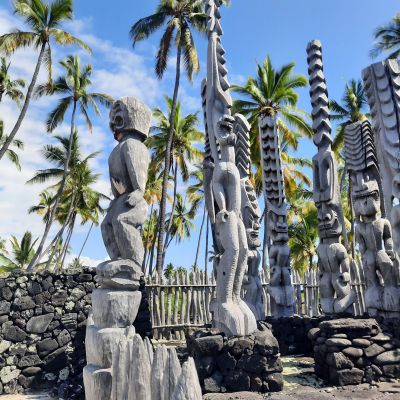
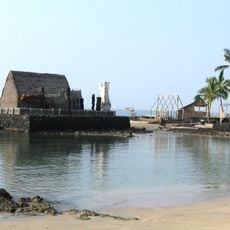
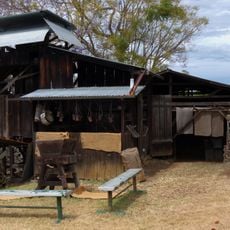
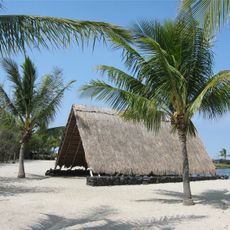
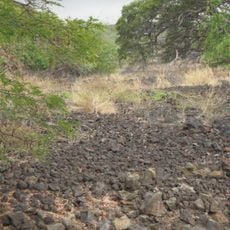
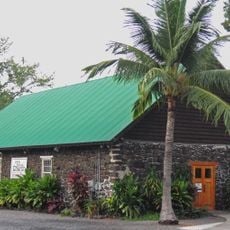
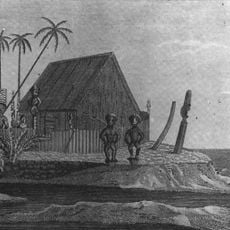
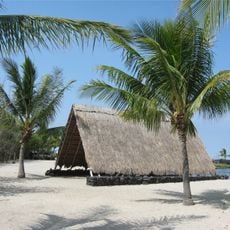
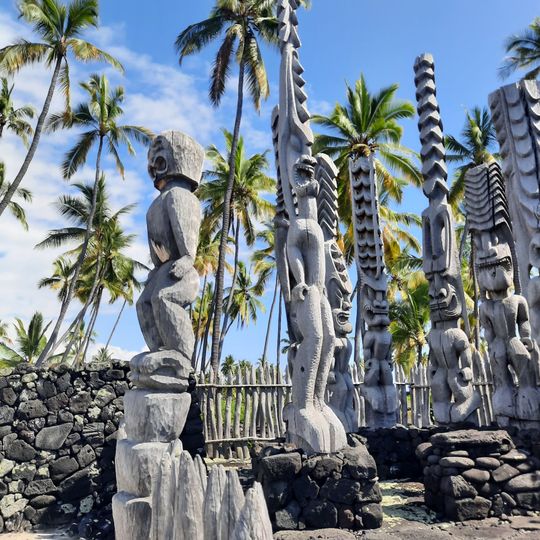
Puʻuhonua o Hōnaunau National Historical Park covers 420 acres on the west coast of the island of Hawaiʻi. Its puʻuhonua is enclosed by a great wall of stacked lava stones, and the grounds hold temple platforms, royal fishponds, sledding tracks and coastal village sites. The Hale o Keawe heiau and several thatched structures with carved wooden figures have been reconstructed.
From ancient times until the early 1800s, this place served as a refuge for people who broke the sacred laws known as kapu. Those who reached this sanctuary could escape death and find protection.
Hale o Keawe was built around 1650 by Kanuha, a Kona chief, as the burial site for his father Keaweʻīkekahialiʻiokamoku. The temple held 23 remains, and Hawaiians believed the mana in the chiefs' bones added protection to the puʻuhonua. The last burial was a son of Kamehameha I in 1818.
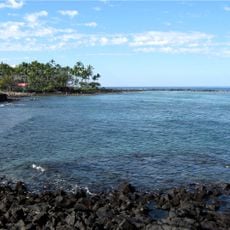
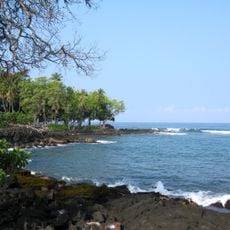
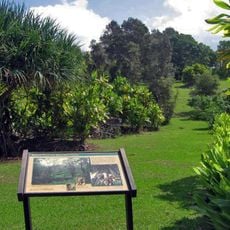
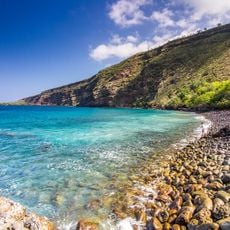
The 420-acre grounds hold temple platforms, royal fishponds and reconstructed thatched structures, with the sandy shore and turtle beach at the seaward edge. Paths are short and mostly level, but the lava-stone surfaces and sand are uneven, so sturdy shoes help. Sun exposure is high along the coast; carry water and shade protection.
The park is one of only four places in Hawaii where the state flag may officially fly alone, without the American flag; the others are ʻIolani Palace, Mauna ʻAla and Thomas Square.
The community of curious travelers
AroundUs brings together thousands of curated places, local tips, and hidden gems, enriched daily by 92,722 contributors worldwide.