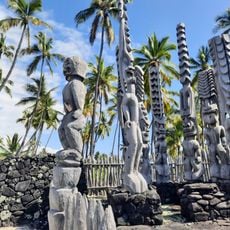
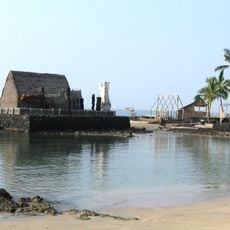
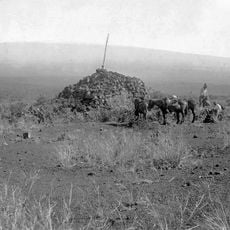
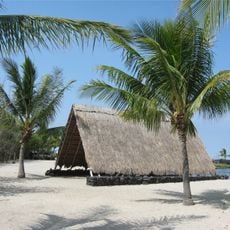
Hale o Keawe, Temple platform at Puʻuhonua o Hōnaunau National Historical Park, United States.
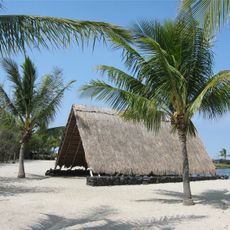
Hale o Keawe is a reconstructed temple platform located in a national historical park on Hawaii's Kona coast. The structure features a thatched roof and wooden palisade built to match the design from the 18th century.
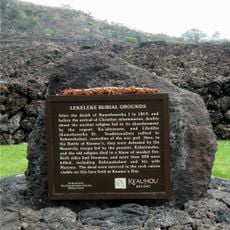
Hale o Keawe was built around 1650 by Kanuha, a Kona chief, as the burial site for his father, the aliʻi nui Keaweʻīkekahialiʻiokamoku; the complex may date to 1475 under ʻEhu-kai-malino. Kona nobility were buried here until the kapu system was abolished, the last being a son of Kamehameha I in 1818. In 1829 Kapiʻolani removed the remaining bones and ordered the temple destroyed; the bones reached the Royal Mausoleum in 1858. The heiau was reconstructed in the 1960s.
Hale o Keawe held the bones of 23 chiefs, including Keaweʻīkekahialiʻiokamoku, and Hawaiians believed the mana in those bones extended protection over the puʻuhonua. The last person buried here was a son of Kamehameha I in 1818. After the kapu system was abolished, this temple was left standing while other heiau were destroyed.
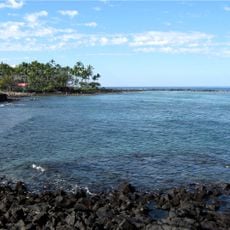
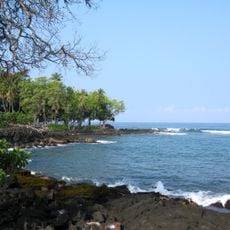
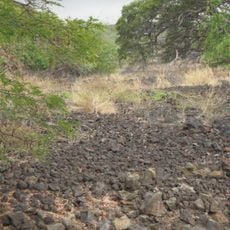
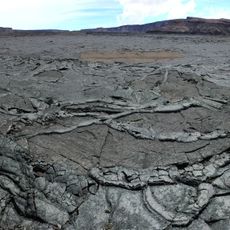
Hale o Keawe stands inside Puʻuhonua o Hōnaunau National Historical Park on the Kona coast of Hawaiʻi island, reached on foot from the visitor center along the coastal trail. The temple sits behind the Great Wall near the royal grounds, and the Kiʻilae village area lies to the south. The lava surface is uneven, so wear closed shoes and carry water and sun protection.
Hale o Keawe held 23 remains, including those of Keaweʻīkekahialiʻiokamoku, and its mana was thought to shield the puʻuhonua. Lord George Byron, cousin of the poet, looted the temple in 1825. In 1829 Kapiʻolani hid the remaining bones in the Pali Kapu O Keōua cliffs above Kealakekua Bay before ordering the temple destroyed; the bones reached the Royal Mausoleum in 1858.
The community of curious travelers
AroundUs brings together thousands of curated places, local tips, and hidden gems, enriched daily by 92,629 contributors worldwide.