Punchbowl Crater, Extinct volcanic tuff cone in Honolulu, United States
Punchbowl Crater is an extinct volcanic tuff cone above downtown Honolulu, its rim reaching 75 m. The crater formed 75,000 to 100,000 years ago when lava erupted through cracks in old coral reefs. Inside the grassy bowl, rows of flat pale gray markers of the National Memorial Cemetery of the Pacific lie in arcs and straight lines below a wooded ridge, with a curving path and a single thin pole among the graves.
Punchbowl Crater formed 75,000 to 100,000 years ago when lava was ejected through cracks in old coral reefs during the Honolulu Volcanic Series, probably in a single eruption. In the late 1890s a cemetery was proposed but rejected over water-supply fears; Congress authorized a national cemetery in 1943, and construction began in February 1948 after Guam war dead awaited burial.
The Hawaiian name Pūowaina is usually translated as "Hill of Sacrifice", recalling its use as an altar where human sacrifices were offered and violators of taboos were killed. Under Kamehameha the Great two cannons stood on the rim to salute distinguished arrivals. Since 1949 the crater has held the National Memorial Cemetery of the Pacific, the largest military cemetery in Hawaii, with almost 37,000 American soldiers buried there.
Visitors reach the site via a winding access road that is open daily and provides parking inside the crater walls. The grounds feature maintained lawns and paved paths that are accessible for wheelchairs.
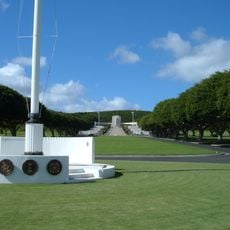
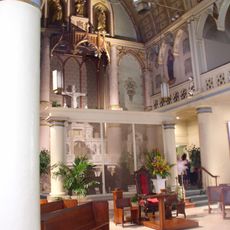
The chapel at the cemetery center displays a mosaic wall map showing military operations across the Pacific. The outer walls of the site hold engraved names of nearly 30,000 missing soldiers whose remains were never found.
The community of curious travelers
AroundUs brings together thousands of curated places, local tips, and hidden gems, enriched daily by 92,640 contributors worldwide.