Kukaniloko Birth Site, Archaeological site in Wahiawa, United States.
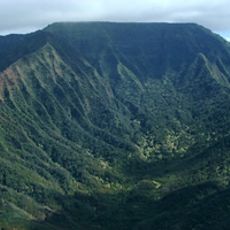
Kūkaniloko Birth Site, also called the Kūkaniloko Birthstones State Monument, is an archaeological site of about 180 stones near Wahiawā on Oʻahu, at the intersection of Kamehameha Highway and Whitmore Avenue. The stones date back at least to the 14th century and lie on the Wahiawā Plateau between the Waiʻanae and Koʻolau ranges.
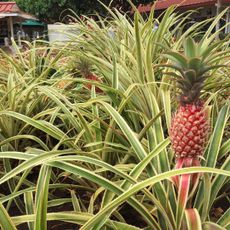
Kūkaniloko was the island's symbolic piko, where high chiefs' children were born from as early as 1100 until the mid-1600s. Thirty-six witnesses, the father and 35 other chiefs, watched each birth, announced by sacred drums; the newborn was then taken to a nearby temple for purification, cutting of the umbilical cord and a reading of its genealogy. The associated Hoʻolonopahu Heiau was later destroyed to make way for sugarcane and pineapple fields.
The name Kūkaniloko means "to anchor the cry from within." Fathers and 35 other chiefs witnessed each royal birth, announced by sacred drums; the 36 stones of the complex stand for those witnesses. The newborn was then taken to a nearby temple to be purified, have the umbilical cord cut and the genealogy read.
The site lies near the intersection of Kamehameha Highway and Whitmore Avenue, just north of Wahiawā, in Honolulu County. It became a state park in 1992, when 5 acres (2.0 ha) including the stones were set aside; the National Register boundaries were expanded in 1995. The stones stand in open ground on the Wahiawā Plateau, so plan for sun and wind.
The 36 stones of the complex stand for the 36 witnesses — the father and 35 other chiefs — who watched each royal birth, which was announced by sacred drums. The newborn was then taken to a nearby temple for purification, cutting of the umbilical cord and a reading of its genealogy.
The community of curious travelers
AroundUs brings together thousands of curated places, local tips, and hidden gems, enriched daily by 93,029 contributors worldwide.