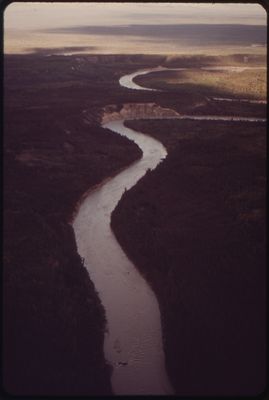
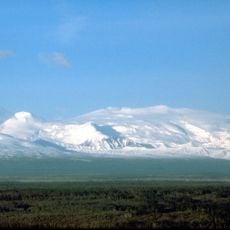
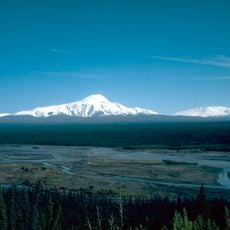
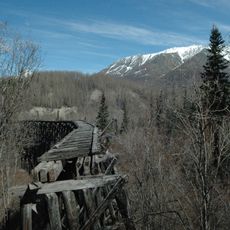
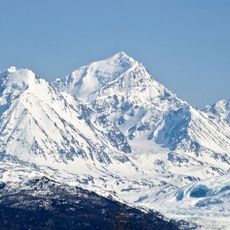
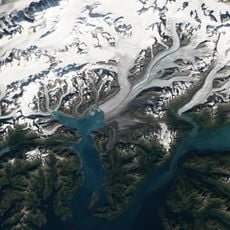
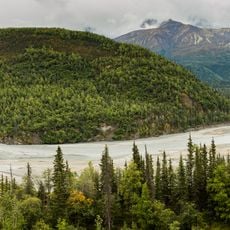
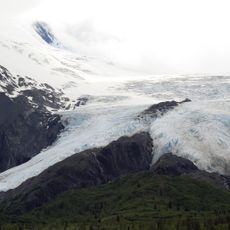
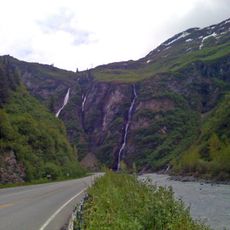
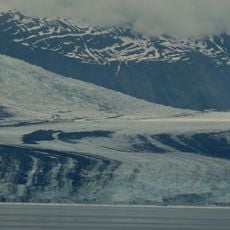
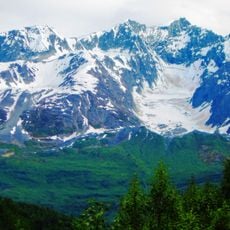
Tazlina River, Brook in Valdez-Cordova Census Area, Alaska, United States.
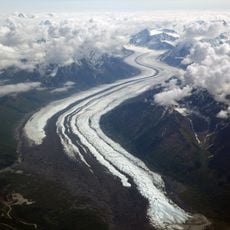
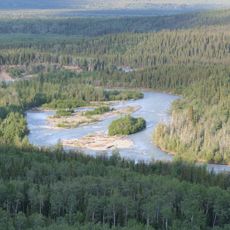
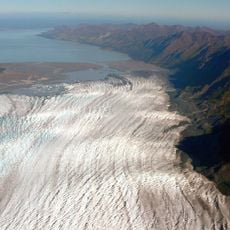
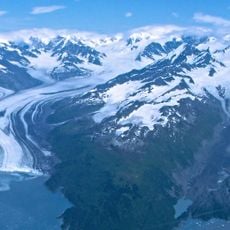
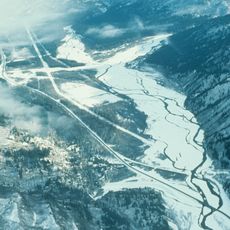
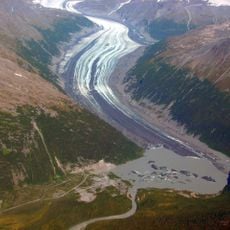
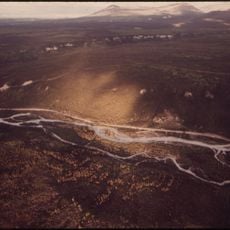
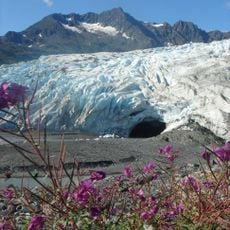
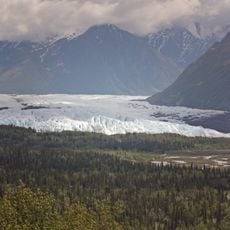
The Tazlina River is a glacial river in south-central Alaska that flows from Tazlina Lake down to the Copper River across about 30 miles of mountain terrain. The water carries sediment from glacial melt and creates shifting channels as it moves through steep valleys and open areas.
Russian explorers documented this river system during the 1800s as they mapped the coastal regions of Alaska and its inland waterways. The river later became an important route for people seeking gold and trading furs in the interior regions.
The river has long served as a fishing ground for local communities who rely on its salmon and grayling populations for food and subsistence. Today, people continue to use these waters as part of their connection to the landscape and natural resources of the region.
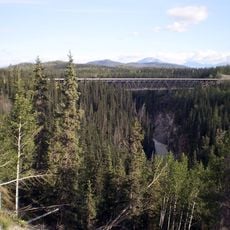
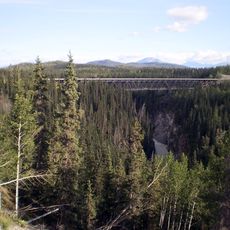
The lower Tazlina River is crossed by the Richardson Highway, which meets the main stem and gives access to the water; the Glenn Highway runs roughly parallel to the river to the north for most of its course. Boaters can also launch at Little Nelchina State Recreation Site where the Little Nelchina River meets the Glenn Highway. Expect logjams, strong winds on Tazlina Lake, swift cold silty water, and the Oxbow Drop rapids upstream of the Richardson Highway bridge take-out.
The Tazlina River drains 6,890 square kilometres and carries an average of 115 cubic metres per second at its mouth. Its highest flows come in July and August, when snow and glacier melt feed the channel. The name was recorded as "Tlieshitna" by Rufus Serebrenikov in 1848, and Henry Tureman Allen wrote it as "Tezlina" in 1887.
The community of curious travelers
AroundUs brings together thousands of curated places, local tips, and hidden gems, enriched daily by 94,226 contributors worldwide.