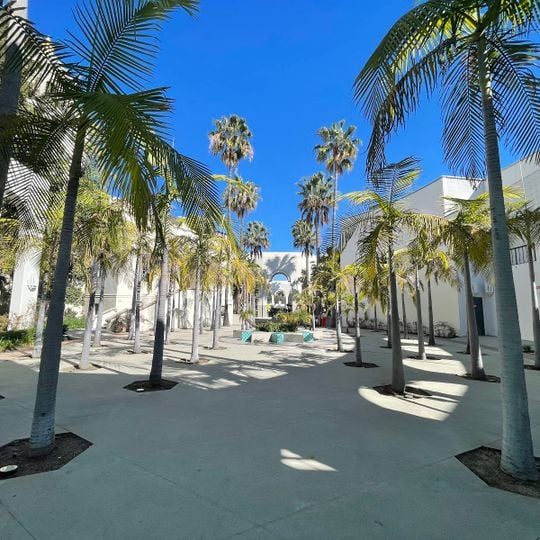
Beverly Hills City Hall, Municipal building in Beverly Hills, United States
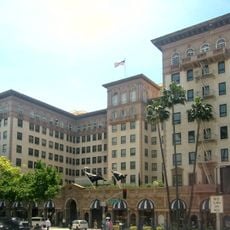
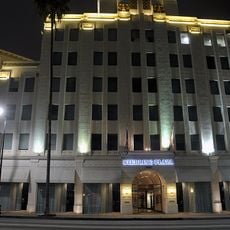
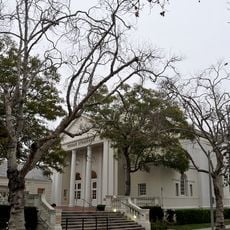
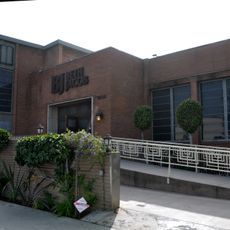
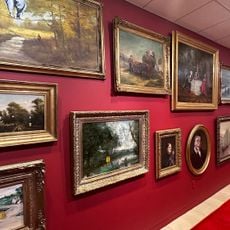
Beverly Hills City Hall is a 1931–32 municipal building designed by William J. Gage and Harry G. Koerner in the California Churrigueresque style, a form of Spanish Revival architecture, and built by the Herbert M. Baruch Corporation. It was expanded from 49,000 to 67,000 square feet in 1982, and its ground-floor reception area was redone in 2008, when the main entrance moved from North Crescent Drive to 455 North Rexford Drive. It houses the mayor's office, City Council chambers, the Municipal Gallery designed by Gere Kavanaugh, and a Rodin sculpture, Torso of a Walking Man.
City administration operated from the Beverly Hills Hotel in the 1910s and 1920s, then from a two-storey Burton Way building erected in 1925. A 1930 petition signed by 2,000 residents led the city to buy land from Pacific Electric; William J. Gage and Harry G. Koerner designed the new hall, built 1931–1932 by the Herbert M. Baruch Corporation.
A bronze sculpture by Auguste Rodin titled 'Torso of a Walking Man' is displayed inside. It brings artistic quality to this administrative center and draws visitors interested in fine art.
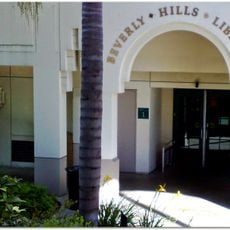
The main entrance is at 455 North Rexford Drive, facing the Beverly Hills Public Library; it moved there from North Crescent Drive in 2008. The building is bounded by North and South Santa Monica Boulevard and North Crescent Drive, with the Civic Center behind it on South Santa Monica Boulevard and the police department next door.
The building was honored during the city's centennial celebration when bakers created an oversized cake replica of its exact design. This memorable event showed how deeply the community connected to its civic landmark.
The community of curious travelers
AroundUs brings together thousands of curated places, local tips, and hidden gems, enriched daily by 93,000 contributors worldwide.