Blackwater Draw archaeological site, Archaeological site in Clovis, United States.
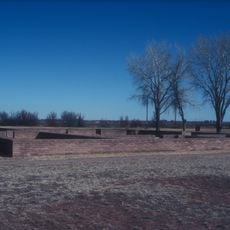
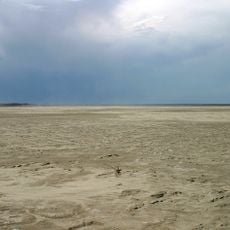
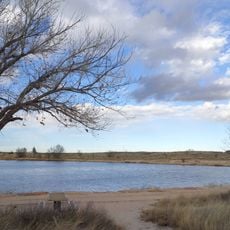
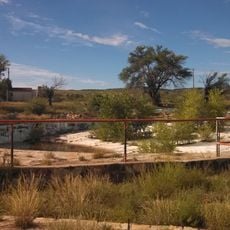
Blackwater Draw, also called Blackwater Locality No. 1 or the Clovis site, is an archaeological site near Clovis in Roosevelt County, New Mexico. It covers the bed of a late-glacial lake that dried up about 7,000 years ago, where excavations begun in 1932 by A. W. Anderson exposed campsites, stone tools and bones of Pleistocene megafauna such as mammoths, horses, camels and sabre-toothed cats.
The site was discovered in 1929 and became a key location for understanding early human settlement in North America. It received recognition as a National Historic Landmark in 1961 due to its significance in defining the Clovis culture.
The excavations reveal how early people lived and hunted near the ancient lake. Visitors can see how skilled these inhabitants were at making tools and adapting to their surroundings.
The site is managed by Eastern New Mexico University and features a museum and interpretive trail system for exploring the discoveries. Comfortable walking shoes are recommended as the terrain requires some movement to see the different excavation zones.
The site's Clovis points are fluted, with a channel struck from the base, and are longer than the later Folsom points. Excavations also yielded bones of Columbian mammoths, camels, horses, bison, sabre-toothed cats and the large canid Canis dirus, animals that disappeared with the end of the Pleistocene.
The community of curious travelers
AroundUs brings together thousands of curated places, local tips, and hidden gems, enriched daily by 92,691 contributors worldwide.