Monte Albán, Pre-Columbian archaeological site in Santa Cruz Xoxocotlán, Oaxaca, Mexico
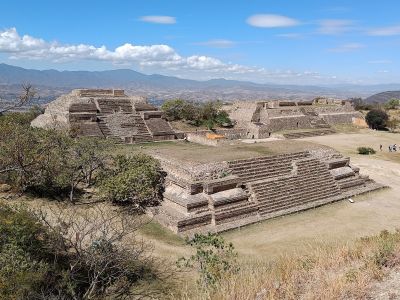
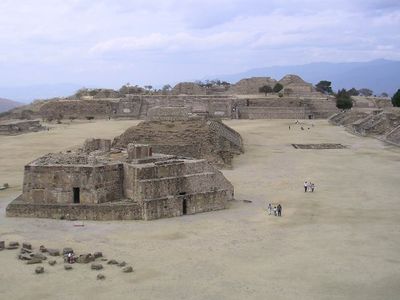
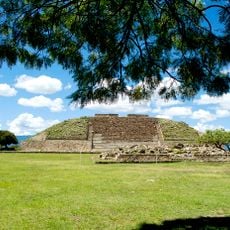
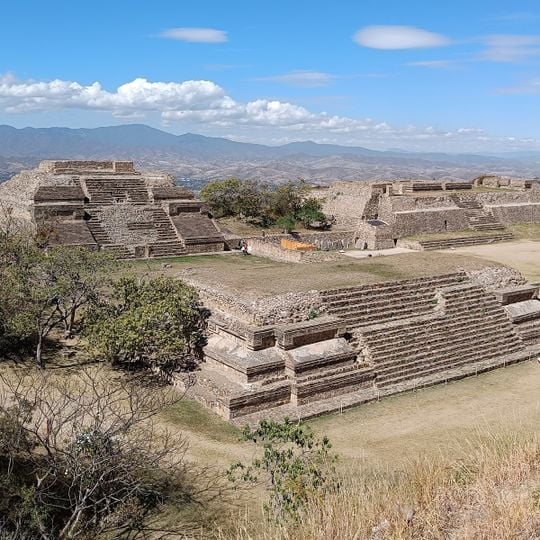
Monte Albán is an archaeological site on mountain terraces in Santa Cruz Xoxocotlán, Mexico, rising to 1940 meters and containing pyramids, plazas and ceremonial buildings spread across a broad summit. The central plaza is surrounded by low platforms, stone stairways and carved monuments arranged in a clear spatial order.
The settlement served as the Zapotec capital starting around 500 BCE and remained occupied until roughly 800 CE. During the fourteenth century, Mixtec groups reused the abandoned structures for burials and religious ceremonies.
The Mexica called the city Ocelotépec, Jaguar Mountain in Nahuatl, rendered in Zapotec as Dani Beedxe; the Mixtecs knew it as Yukú Kuììn. The Spanish name Monte Albán comes from the Alban Hills of Italy, which the landscape resembled to the conquerors. The ancient Zapotec name remains unknown.
The climb involves steep paths and visitors should wear sturdy shoes and prepare for long walks in changeable weather conditions. Views across the valleys are clearest in the morning when the sun is lower and the air is cooler.
Tomb 7, excavated by Alfonso Caso with Eulalia Guzmán in 1933, held the largest deposit of Mesoamerican goldwork found to that date. The finds came from a structure the Mixtecs had reused centuries after the Zapotec city was abandoned.
The community of curious travelers
AroundUs brings together thousands of curated places, local tips, and hidden gems, enriched daily by 92,145 contributors worldwide.