Árbol del Tule, Montezuma cypress tree in Santa María del Tule, Mexico.
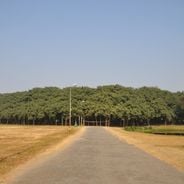
Árbol del Tule is a Montezuma cypress (Taxodium mucronatum) in the churchyard of Santa María del Tule, Oaxaca, Mexico. In 2005 its buttressed trunk had a circumference of 42.0 m, giving a diameter of 14.05 m, or about 9.38 m when the buttresses are smoothed out; a laser measurement put its height at 35.4 m. Its broad crown is made of drooping sprays of small, scale-like green leaves, and a white metal fence stands before the trunk.
The tree stands in the churchyard of Santa María del Tule, about 9 km east of Oaxaca city on the road to Mitla. Zapotec tradition holds that a priest of the wind god Ehecatl, named Pecocha, planted it roughly 1,400 years ago, an age close to the scientific estimate of 1,433–1,600 years. In 2001 it was placed on a UNESCO tentative World Heritage list, from which it was removed in 2013.
Local Zapotec tradition calls the tree Yaga aguitz, "tree of paper", or Yaga guichiciña, "shining tree"; the Nahuatl word ahuehuete means "old man of the water". Children of Santa María del Tule point out animal shapes in the furrowed trunk, among them a deer head, a crocodile and a dolphin. In 1862 Désiré Charnay noted that villagers swept the foot of the tree daily and allowed no branch to be cut.
Travelers can reach the tree by taking Highway 190 east from Oaxaca city or joining daily tour buses that stop at the gated churchyard. Access is available year-round, though early morning hours tend to be less crowded.
Local children point out figures in the trunk's furrows, naming a crocodile, a dolphin, a deer's head and an elf, among others. The Zapotec name Yaga guichiciña means shining tree, and a tale holds that the town sits on a lake plugged by the tree.
The community of curious travelers
AroundUs brings together thousands of curated places, local tips, and hidden gems, enriched daily by 92,640 contributors worldwide.