Barra de Santiago, Coastal wetland complex in Jujutla, El Salvador
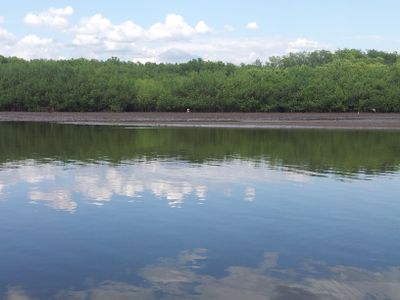
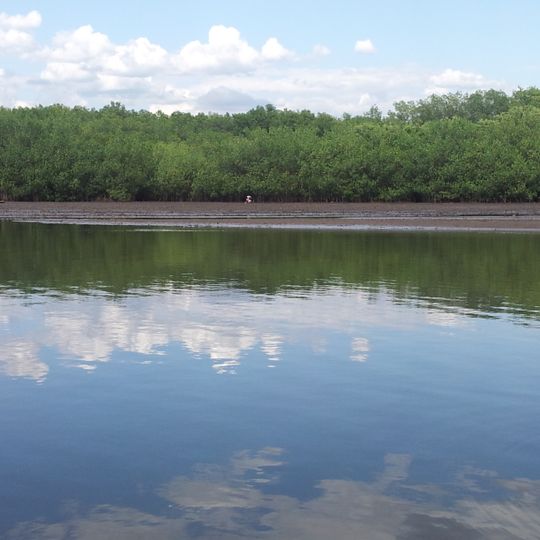
Barra de Santiago is an estuary system in Jujutla, El Salvador, enclosed by a sandy bar. Its inner part is an irregular mangrove with narrow arms about 18 km long; the outer part forms the main channel with three small mangrove islands. Six streams feed the wetland, and the photograph shows still water reflecting sky and clouds, a strip of exposed mud, and a continuous line of green trees.
Traces of ceremonial structures from pre-Columbian times have been found on El Cajete, one of the islands within the area, showing that people settled here long before the colonial period. The site has been shaped by both human presence and natural forces over many centuries.
Local fishing families use small boats and simple nets to catch seafood in the shallow waters, and serve it in small restaurants along the waterfront. The food here follows the rhythm of the tides and the seasons.
The drier months are the best time to visit, when the paths stay firm and the waterways are easier to navigate by boat. Accommodation nearby is basic, so bringing your own supplies makes the stay more comfortable.
On El Cajete, a mangrove-covered island within the wetland, lie the remains of a ceremonial centre with about 13 mounds and structures dated to the Early Postclassic. The island is part of the Barra de Santiago complex, and the earthworks are best made out from the water.
The community of curious travelers
AroundUs brings together thousands of curated places, local tips, and hidden gems, enriched daily by 94,475 contributors worldwide.