El Imposible National Park, National park in Ahuachapán Department, El Salvador
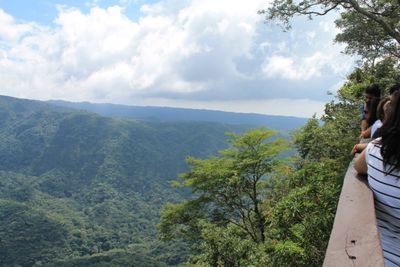
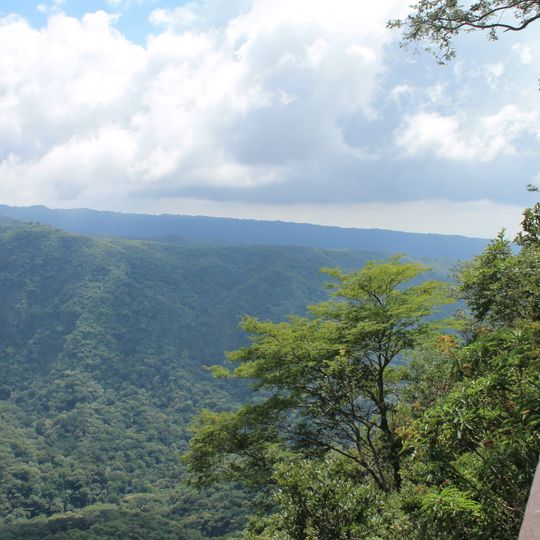
El Imposible National Park is a protected area situated between San Francisco Menéndez and Tacuba municipalities, covering mountainous terrain with elevations ranging from 250 to 1,425 meters (820 to 4,675 feet). The park features dense forests, steep hillsides, and multiple river systems that cut through the landscape.
The area was inhabited in pre-Hispanic times. In the 20th century, farmers north of the region grew, gathered and sold coffee, carrying loads by mule. The route crossed a ravine called El Imposible on a hacienda of the same name, and in 1968 a bridge of stone, sand, cement and water was built there. A plaque reads "Año 1968 dejó de ser Imposible". The park was created on 1 January 1989.
Eight archaeological sites within the park display pre-Hispanic artifacts, including Piedra Sellada with its stone engravings and petroglyphs along the Guayapa tributary.
Visiting requires permits from SALVANATURA offices, and you should prepare for varying weather conditions in the mountains. The dry season offers the best conditions for exploring, with easier trails and clearer views.
The park's name comes from a gorge on the old coffee route where pack mules and their drivers died; a stone bridge built in 1968 carries a plaque reading "Año 1968 dejó de ser Imposible". Eight rivers rise inside the park, among them the Guayapa, Cara Sucia and San Francisco, flowing south toward the Barra de Santiago.
The community of curious travelers
AroundUs brings together thousands of curated places, local tips, and hidden gems, enriched daily by 94,402 contributors worldwide.