Quiriguá, Archaeological site in Izabal Department, Guatemala
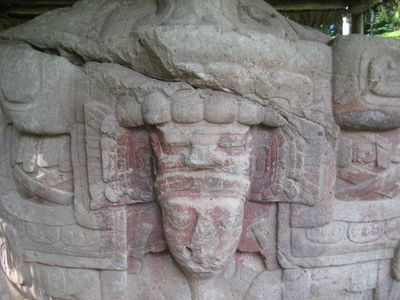
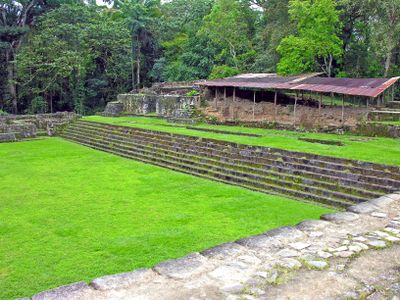
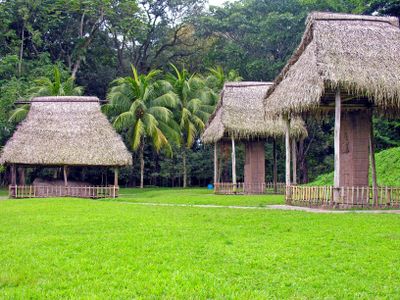
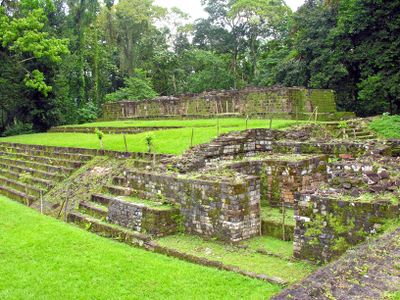
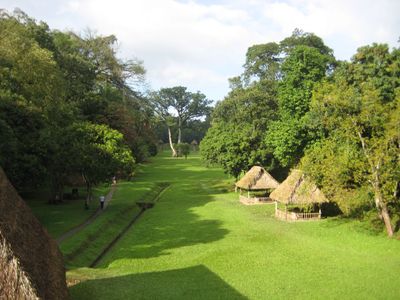
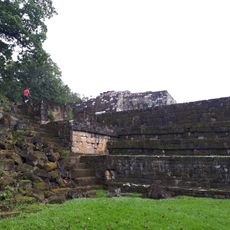
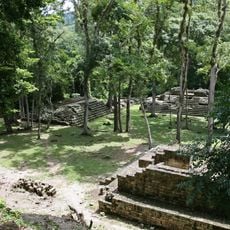
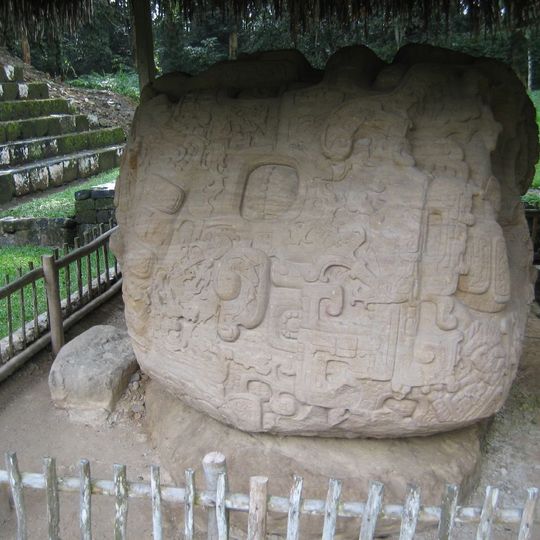
Quiriguá is an archaeological complex with numerous stone monuments, including stelae and zoomorphic altars distributed across multiple elevated plazas and terraces. The site spreads across land covered in dense tropical vegetation, with the carved stones rising among trees and thick greenery.
Quiriguá was occupied by 200 CE, with work on the acropolis beginning around 550 and a surge of grander construction in the 8th century; all building stopped by about 850, apart from a brief reoccupation around 900–1200. In 738 the king K'ak' Tiliw Chan Yopaat defeated Copán, and its captured ruler Uaxaclajuun Ub'aah K'awiil was sacrificed in the Great Plaza, ending Quiriguá's status as a vassal.
The site's original name, Ihk' Way Nal ("Place of the Black Pool"), refers to a mythological location that King K'ak' Tiliw Chan Yopaat had the Great Plaza imitate. The emblem glyph likely reads "kuhul Un Ajaw" (Holy Lord of the Amate Tree), as Ruud van Akkeren proposed, based on the amate tree's broad roots depicted in the glyph.
The best way to explore the site is on foot along the paths between the monuments, which wind through the tropical surroundings. Wear sturdy shoes and bring water, as the heat and humidity are intense and vegetation can be overgrown.
Stela E rises to about 10.6 meters, standing as the tallest carved stone monument ever erected in pre-Columbian America. This extraordinary size shows the technical skill and ambition of the Maya craftspeople who shaped these massive blocks.
The community of curious travelers
AroundUs brings together thousands of curated places, local tips, and hidden gems, enriched daily by 92,651 contributors worldwide.