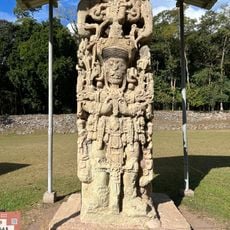
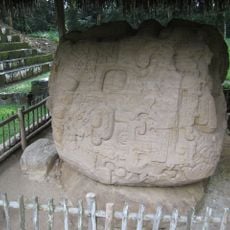
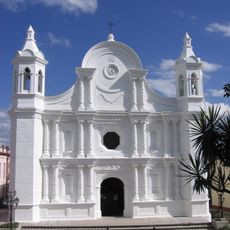
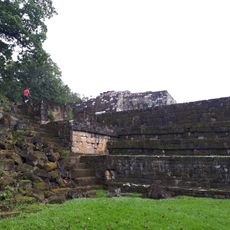
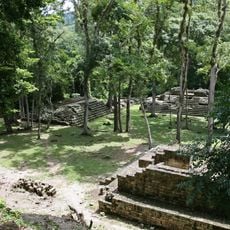
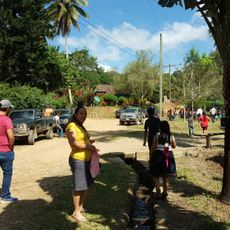
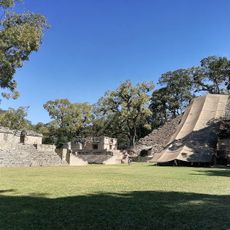
El Puente, Maya archaeological site in La Jigua, Honduras.
El Puente is an archaeological site with around 210 ancient structures organized around five main plazas. The largest building in the central area rises to about 12 meters high and marks the important spaces of the settlement.
El Puente was founded around the mid-6th century AD, in the Early Classic period, not the Late Classic. Architectural and ceramic similarities with Copán suggest that city founded it to control two trade routes meeting in the Florida Valley. It remained allied with Copán and, after Copán's collapse (AD 850–950), appears to have received immigrants from there.
El Puente sits on the frontier between Maya and non-Maya peoples, and its architecture shows it: long structures connected end-to-end, unlike typical Maya layouts. Stonework quality varies from one building to the next, and even within a single structure, as at Structure 3, whose north platform wall is finely cut while the rest is coarser.
The site is open during daylight hours and can be visited without much advance planning. Bringing sturdy footwear and water is helpful, and hiring a local guide greatly helps you understand the ruins.
Green obsidian from the Pachuca source in central Mexico has been excavated at El Puente, showing how far trade networks reached. One excavated vessel held 13 obsidian prismatic blades as an offering, and a seashell was placed beside a skull in another burial.
The community of curious travelers
AroundUs brings together thousands of curated places, local tips, and hidden gems, enriched daily by 94,457 contributors worldwide.