Palacio de San Carlos, Neoclassical building in La Candelaria, Bogotá, Colombia
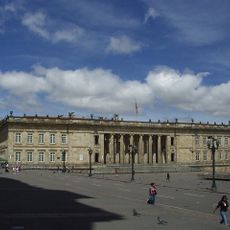
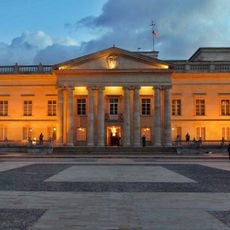
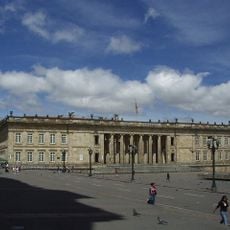
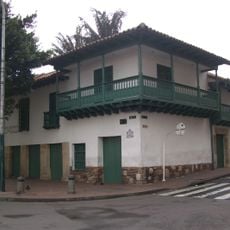
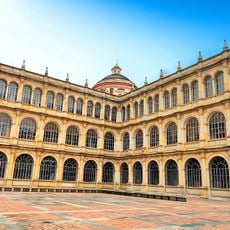
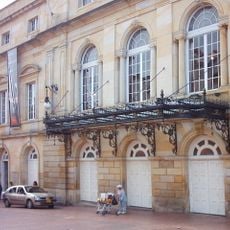
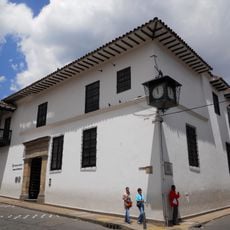
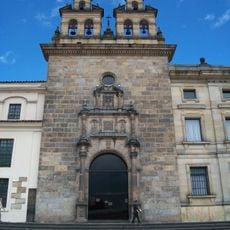
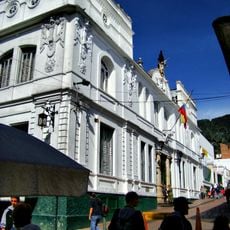
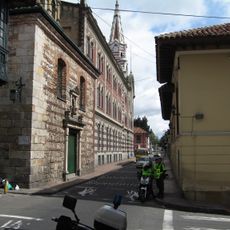
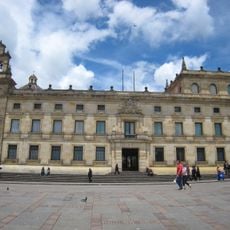
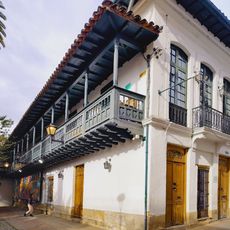
Palacio de San Carlos is a three-story neoclassical mansion at the corner of Calle 10 and Carrera 5 in La Candelaria, Bogotá. It is built around a central courtyard with Tuscan columns and slightly pointed arches, with a stairway on the south side leading to the first floor. The original stone entrance with a balcony and iron railings is preserved as part of the façade, and two rows of rectangular windows include the east-side window through which Simón Bolívar escaped in 1828.
The building originated in the 16th century as the San Bartolomé Seminary and later served as a presidential residence before becoming the Ministry of Foreign Affairs in 1979. This transition reflects the changing roles the structure has played in Colombian governance over several centuries.
The palace's name comes from San Carlos, and its rooms hold objects tied to Colombian history: the Bolívar Room keeps a portrait of Bolívar by Antonio Salguero Salas and a fireplace with two Solomonic columns, while the Cabinet Room displays a flag of the United States of Colombia from 1863. The entrance to the state rooms has a Pompeian fresco painted by Santiago Martínez Delgado in 1950.
The building houses diplomatic operations with limited public access, typically available only during special governmental events or scheduled occasions. Visitors should check ahead for any open-door events or official ceremonies that might be accessible.
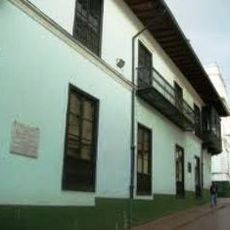
On the stairway landing hangs the bronze that Italian sculptor Pietro Tenerani used as the model for the statue of Bolívar in Bogotá's Plaza de Bolívar. The palace also keeps the window, marked by a Latin plaque, through which Bolívar escaped the September 1828 conspiracy.
The community of curious travelers
AroundUs brings together thousands of curated places, local tips, and hidden gems, enriched daily by 93,868 contributors worldwide.