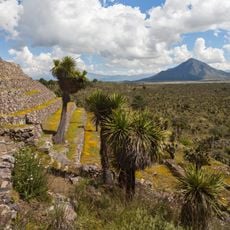
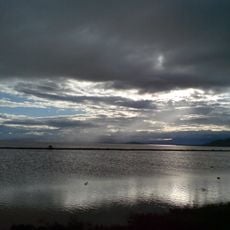
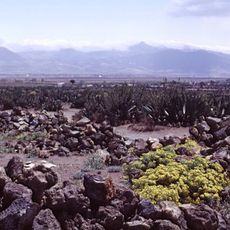
Laguna de Alchichica, Saline lagoon in Tepeyahualco Municipality, Mexico.
Laguna de Alchichica is a saline alkaline crater lake of the axalapasco type, 60 metres deep, with 13 g/L salinity and high magnesium concentrations. It lies in the Libres–Oriental basin of Puebla, on a free aquifer of sands, clays, shale and limestone. A near-continuous ring of whitish-grey carbonate stromatolites and thrombolites runs parallel to the shoreline, some rising above the pale green water.
Laguna de Alchichica fills a maar, a volcanic crater formed when groundwater met hot magma and exploded, in the Libres-Oriental basin of Puebla. Its carbonate mounds grew in two generations: aragonite-rich domes near the shore dated to about 1,100 years, and spongy thrombolites rich in hydromagnesite, huntite and calcite inside the lake dated to about 2,800 years, likely shaped by drying phases and groundwater flow.
Locals around the lagoon tell of a bottomless depth, a hidden connection to the sea, giant worms, mythological monsters and UFOs, and some say a meteorite formed it. The lake's name comes from the Nahuatl for 'water spring'.
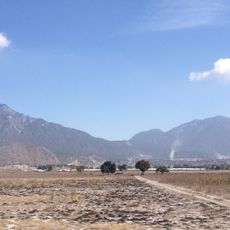
The lagoon lies in the central part of the Libres–Oriental basin in Puebla, reached from Tepeyahualco. The water is saline and alkaline, with 13 g/L of salts and high magnesium content, so avoid drinking it and rinse off after contact. The shoreline ring of tufa and stromatolites is fragile; observe it from the bank rather than walking on it.
The whitish-grey mounds rising from the water are thrombolites, layered microbial structures built mainly by cyanobacteria. Near the shore they form aragonite-rich domes dated to about 1,100 years; deeper in the lake, spongy forms rich in hydromagnesite, huntite and calcite date to about 2,800 years. Shallower microbialites look yellowish-green, deeper ones reddish-orange.
The community of curious travelers
AroundUs brings together thousands of curated places, local tips, and hidden gems, enriched daily by 94,057 contributors worldwide.