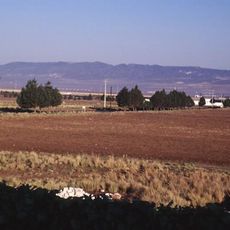
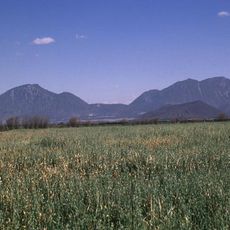
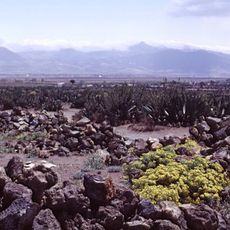
Cantona, Archaeological site in Puebla, Mexico.
Cantona is an archaeological site in Puebla, Mexico, covering about 12 square kilometres in three units, the largest in the south at five square kilometres. Its stone platforms and terraces rise in stepped levels, built of rough grey-brown volcanic blocks fitted without stucco or mortar. A network of over 500 cobblestone causeways links patios, plazas and ball courts; the main avenue, Calle Primera, runs 563 metres.
Cantona was likely founded at the end of the Late Preclassic and occupied from around 200 BCE. Its apogee came between 600 and 1000 CE, when Teotihuacan lost its dominance and regional states competed for trade routes; Cantona controlled traffic through the Serdán valley and the resources of the Sierra Madre Oriental. It was abandoned after the Chichimec invasions in the 11th century, some 300 years before the Spanish arrived.
Cantona's name derives from the Nahuatl Caltonal, "House of the Sun". Obsidian and stone workshops found in the patios show that toolmaking was a specialised craft, and the Zaragoza obsidian mine lies nearby. The city also supplied the lowlands with pulque, a derivative of the maguey plant.
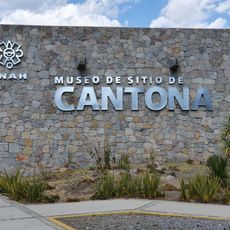
The archaeological zone opens daily from 9:00 to 17:00 and includes a site museum displaying animal remains, musical instruments, and everyday objects. Walking through the extensive ruins requires sturdy footwear and sun protection.
The architecture uses no mortar or stucco whatsoever, relying instead on the natural colors and textures of stone for decorative effects. This building technique gives the structures a characteristic appearance rarely found elsewhere in Mesoamerica.
The community of curious travelers
AroundUs brings together thousands of curated places, local tips, and hidden gems, enriched daily by 94,317 contributors worldwide.