La Quemada, Archaeological site in Villanueva Municipality, Mexico.
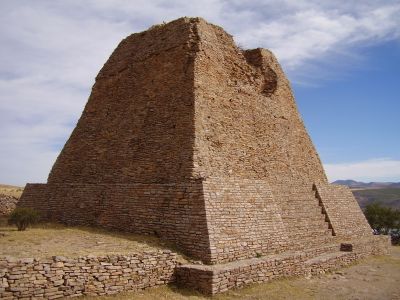
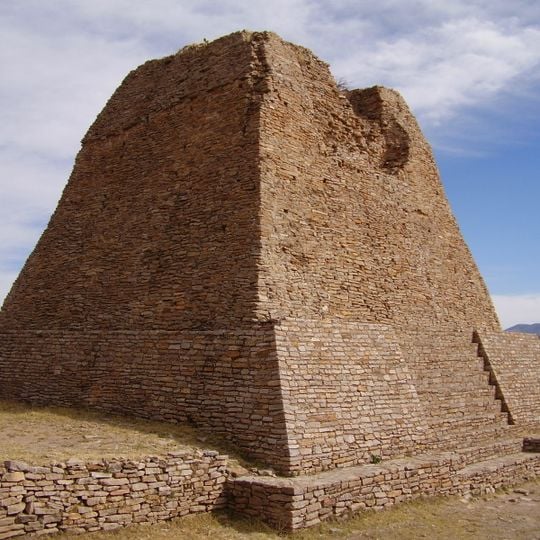
La Quemada is an archaeological site in Villanueva Municipality, Zacatecas. Its structures are built of flat rhyolite slabs laid in horizontal courses, forming platforms and terraces on the hillside. The visible face has a lower section of regular masonry and an upper section of rougher stonework, with a stone staircase on the right and a low wall at the base.
Between the 4th and 12th centuries, the site served as a regional center for trade in minerals and salt. Connections extended south to Teotihuacán.
The name "La Quemada" means "the burnt one" in Spanish. Spanish chroniclers linked the fire-blackened ruins to the name, and the hacienda that owned the land later took it too; archaeology confirms the site was burned and abandoned. Fray Juan de Torquemada in 1615 and Francisco Javier Clavijero in 1780 tied the place to Chicomoztoc, the "Place of the Seven Caves" of Mexica migration accounts.
The site lies 56 kilometers (35 miles) south of Zacatecas city on Federal Highway 54. A small museum displays finds from the region and explains the history of the place.
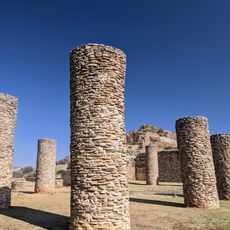
The Hall of Columns consists of eleven round stone pillars that once supported a roof. This construction is rare among northern Mexican sites.
The community of curious travelers
AroundUs brings together thousands of curated places, local tips, and hidden gems, enriched daily by 94,400 contributors worldwide.