Guadalupe regional museum, Regional museum in Guadalupe Municipality, Mexico
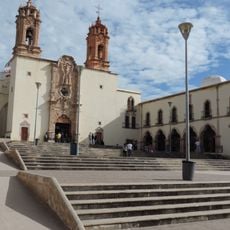
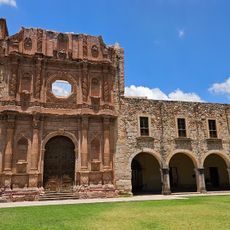
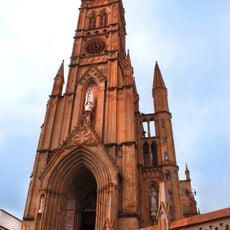
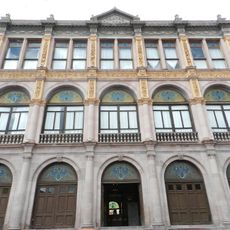
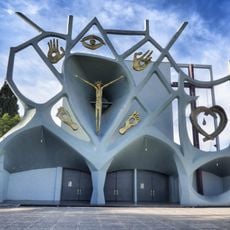
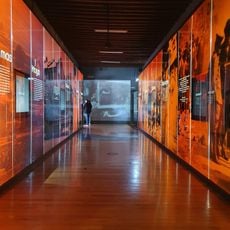
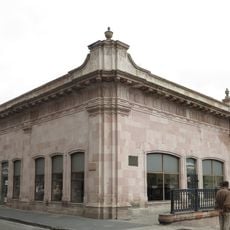
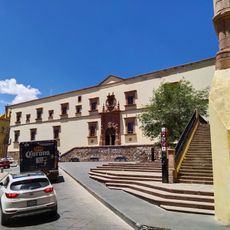
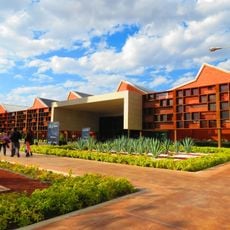
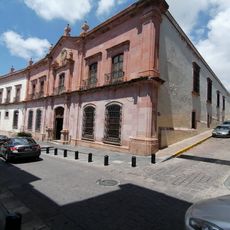
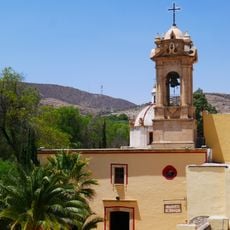
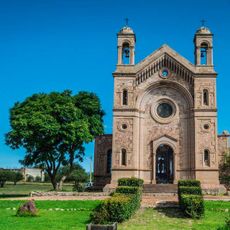
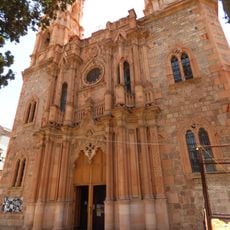
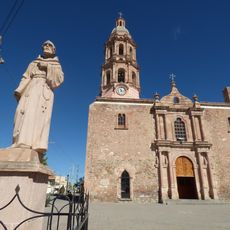
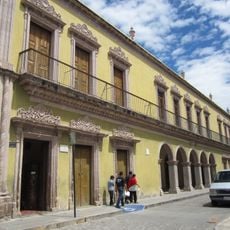
The Guadalupe Regional Museum is a museum in Guadalupe Municipality, in the state of Zacatecas, Mexico, and part of a UNESCO World Heritage Site. It holds collections of colonial paintings, sacred objects, and historical artifacts that document the region's past from the early Spanish period onward.
The Franciscan Colegio de Propaganda Fide de Nuestra Señora de Guadalupe was inaugurated on 12 January 1707 by fray Antonio Margil de Jesús on land donated by Jerónima de Castilla, widow of Melgar, where a chapel to Our Lady of Carmen had stood. It trained Franciscan friars for 152 years until 1859, when Governor Jesús González Ortega claimed the building under Benito Juárez's nationalization laws. It then served as an arts and crafts school, barracks, asylum and orphanage; a section opened in 1918 as the Museo de Antigüedades del Ex Convento de Guadalupe, and the INAH recovered the whole complex for the museum from the 1970s.
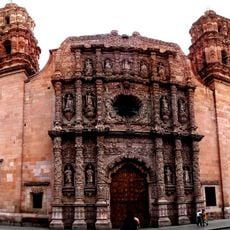
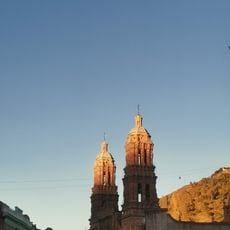
The former college church still serves the parish, while the cloisters keep their 26-painting cycle on the life of Francis of Assisi, used for daily instruction of the friars. The portería displays portraits of founders José Guerra, Antonio Margil de Jesús and Pedro de la Concepción y Urtiaga. The atrium reproduces that of the Querétaro apostolic college.
The museum complex is large, so it is worth wearing comfortable shoes and leaving enough time to visit the church, the cloister, and the exhibition rooms without rushing. Weekday visits tend to be quieter than weekends.
The convent library holds more than 14,000 volumes, mostly from the 18th and 19th centuries. Among the paintings, one series depicts Spanish friars sent to Japan and executed at Nagasaki in 1597 with local Christians, a subject that occupied the Franciscan order for a long time.
The community of curious travelers
AroundUs brings together thousands of curated places, local tips, and hidden gems, enriched daily by 93,762 contributors worldwide.