Mission San Juan Capistrano, Catholic church building in San Antonio, US
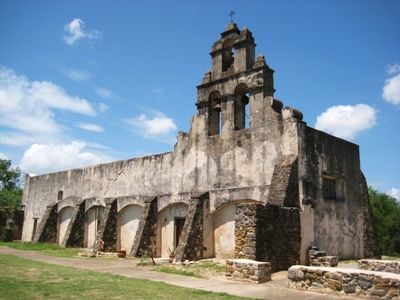
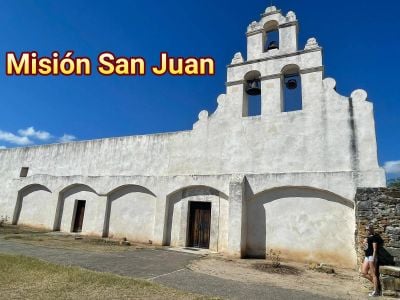
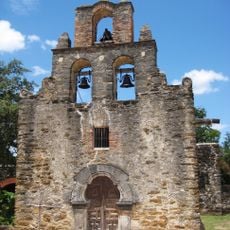
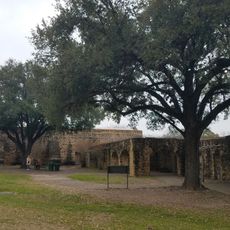
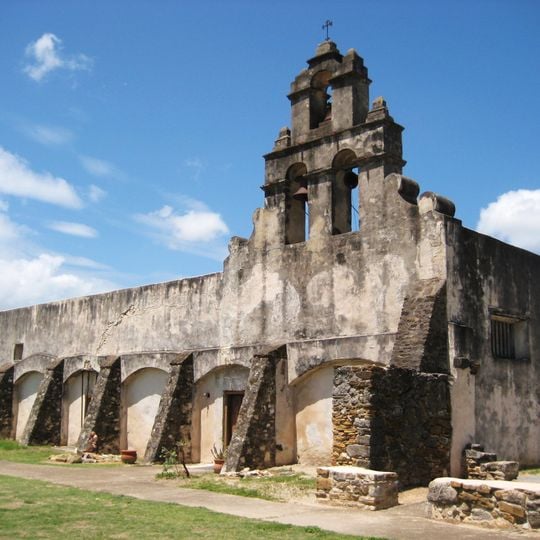
Mission San Juan Capistrano is a Spanish Colonial mission complex whose long, low facade of pale, weathered stucco rises into a stepped bell tower with three arched openings, two holding dark bells. A five-arch colonnade with exposed brick and stone columns runs along the front, and a dark wooden door sits in the rightmost arch. The church, priests' quarters, and other structures were reconstructed in the 1960s; a 2012 renovation added a pier-and-beam foundation and eggshell-white lime plaster.
Founded in 1716 as La Misión San José de los Nazonis on the Neches River, it was evacuated in 1719 after a French attack, re-established in 1722, and moved to the San Antonio River in 1731. A brush-and-mud chapel was replaced around 1756 by a long flat-roofed granary with a belfry holding two bells. Secularized on July 14, 1794, it was served from Mission San Francisco de la Espada and later San José until 1824; the church, priests' quarters and other structures were reconstructed in the 1960s, and a $2.2 million pier-and-beam foundation was added in 2012.
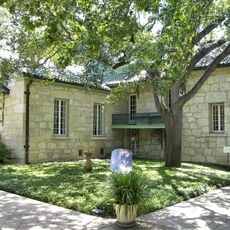
The mission is named for Saint John of Capistrano, a 15th-century theologian and warrior priest from the Abruzzo region of Italy. The site is an active parish church, with Mass held in the reconstructed church, and the Archdiocese of San Antonio keeps the church, rectory and Slattery Hall. Three carved, painted Spanish Colonial statues, 3 to 4 feet tall, were stolen from the altar on the night of 31 July or early 1 August 2000.
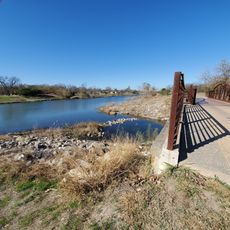
The grounds are open and easy to walk through, with a paved path that leads along the river and connects to other nearby historic sites. Morning visits are often cooler and quieter, and shaded spots near the old walls offer a good place to rest.
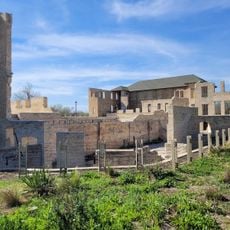
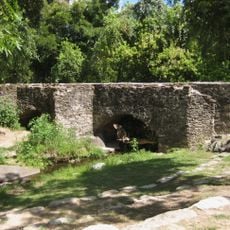
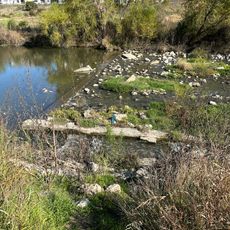
A short walk from the church ruin leads to a working farm run with the San Antonio Food Bank, where traditional crops are still planted in old Spanish style. The nearby Yanaguana Trail follows the original course of the river, and visitors often spot turtles or birds below the bank.
The community of curious travelers
AroundUs brings together thousands of curated places, local tips, and hidden gems, enriched daily by 94,534 contributors worldwide.