Lake Austin, Reservoir in Austin, United States
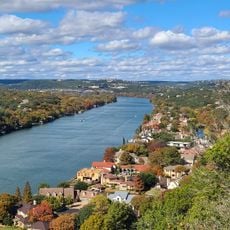
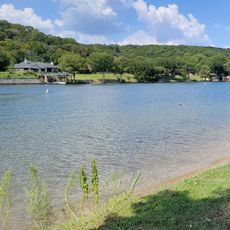
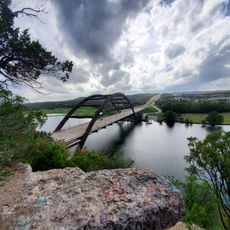
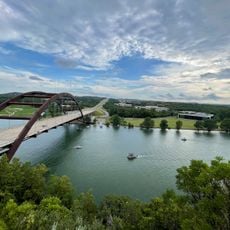
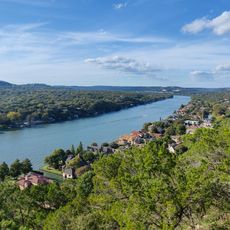
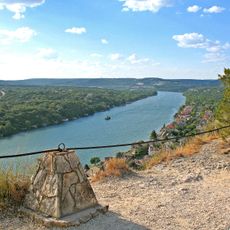
Lake Austin is a 20-mile (32 km) reservoir on the Colorado River in west Austin, Texas, held back by Tom Miller Dam and fed by releases from Lake Travis. It is up to 1,300 feet (400 m) wide, with wooded slopes and houses along its banks, and a bridge crossing between two hills in the distance.
The first reservoir on this site, Lake McDonald, was formed by the Austin Dam built between 1890 and 1893; a 1900 storm destroyed that dam, and a 1915 rebuild was abandoned after a contract dispute and wrecked by storms. The Lower Colorado River Authority began Tom Miller Dam in 1938, and the lake filled in 1939. Its two 6,750 kW generators produce hydroelectric power.
The lake's name changed from Lake McDonald to Lake Austin after the 1939 dam. Boaters gather in designated no-wake zones, and the Austin Parks and Recreation Department teaches canoeing, kayaking and sailing. Largemouth bass, catfish and sunfish were stocked for fishing.
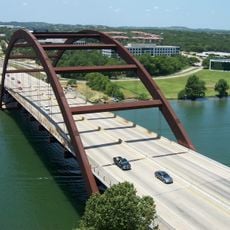
The lake runs about 32 km from Mansfield Dam to Tom Miller Dam, with Pennybacker Bridge carrying Loop 360 over it near Bull Creek. Water levels stay nearly constant because releases from Lake Travis upstream compensate for the outflow. Boaters gather in designated no-wake zones, and the Austin Parks and Recreation Department runs canoeing, kayaking and sailing classes.
Lake Austin was one of the Texas Highland Lakes infested with hydrilla, a non-native aquatic plant. Each January and February the Lower Colorado River Authority lowered the water so freezing air could kill much of it; by March 2014 Asian grass carp stocked by the City of Austin had eliminated it. By September 2016 the carp were damaging native wildlife.
The community of curious travelers
AroundUs brings together thousands of curated places, local tips, and hidden gems, enriched daily by 92,967 contributors worldwide.