Parlange Plantation House, Plantation in Pointe Coupee Parish, Louisiana, United States
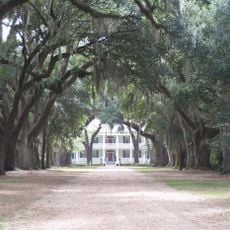
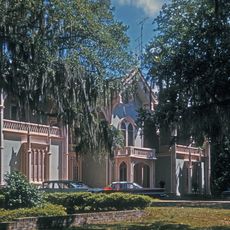
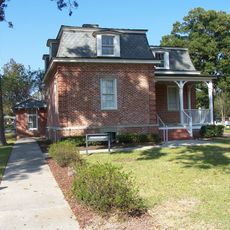
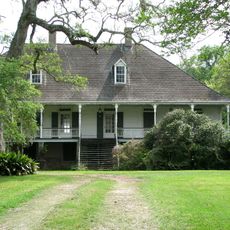
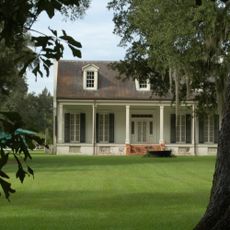
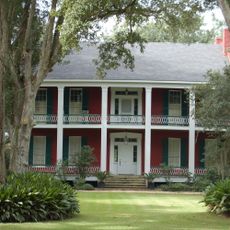
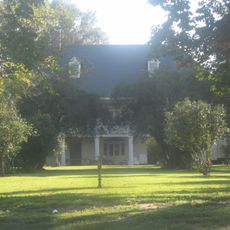
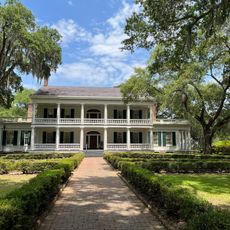
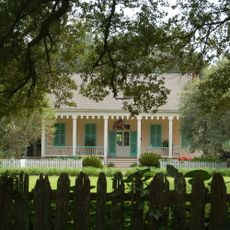
Parlange Plantation House is a two-story raised cottage at Louisiana Highways 1 and 78 in Pointe Coupee Parish. Its main floor rests on a brick basement with brick pillars supporting the second-story veranda; the brick was made by enslaved people on the plantation. Walls inside and out are bousillage, a mix of mud, sand, Spanish moss and animal hair, and the walls and ceilings are close-fitting bald cypress planks. An octagonal pigeonnier stands near the house.
Vincent de Ternant received the grounds in a French land grant and developed 10,000 acres facing False River; his son Claude switched the cash crop from indigo to sugarcane and cotton. Oral history dates the house to c. 1750, while scholarly works accept that founding date but place construction at 1830–1840. Virginie de Ternant's second husband, Colonel Charles Parlange, gave the plantation its name; she died in 1887.
The walls show bousillage, a traditional building technique mixing mud, sand, Spanish moss, and animal hair that reflects Louisiana's French colonial style. You can see how early residents used materials available nearby to construct their homes.
Visits must be arranged in advance since the property offers private tours only. The grounds with active cattle and sugarcane fields are not freely accessible to walk through at any time.
During the Civil War, both the Union and Confederate armies used the property as headquarters at different times, first General Nathaniel Banks and later General Richard Taylor. This shows how central the estate was to the military operations of both sides.
The community of curious travelers
AroundUs brings together thousands of curated places, local tips, and hidden gems, enriched daily by 94,572 contributors worldwide.