John James Audubon Bridge, Cable-stayed bridge in southern Louisiana, United States
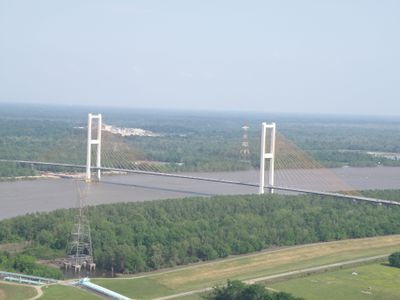
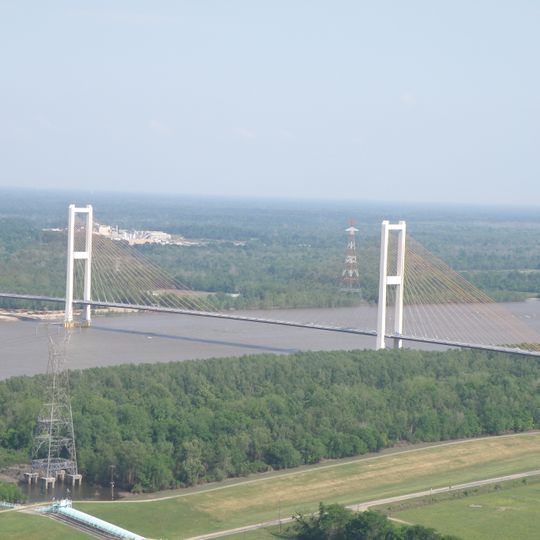
The John James Audubon Bridge is a cable-stayed bridge over the Mississippi River between Pointe Coupee and West Feliciana parishes in Louisiana. Its two white concrete towers, each with rectangular openings and a crossbeam, rise above a flat deck; diagonal cables fan from the tower tops to the deck, and thin vertical suspenders drop from the main cables. The bridge carries Louisiana Highway 10 and has a main span of 1,583 feet (482 m).
The bridge opened in 2011, replacing ferry crossings that had served communities for many generations between New Roads and St. Francisville. This marked the end of a long tradition of river passage by boat.
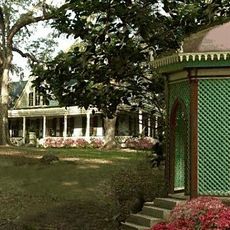
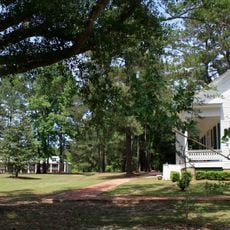
The bridge is named for John James Audubon, who painted 32 works of his Birds of America series in 1821 while tutoring Eliza Pirrie at Oakley Plantation near St. Francisville. In 2011 the east approach was named the General Robert H. Barrow Memorial Approach and the west approach the General John A. Lejeune Memorial Approach.
The bridge carries Louisiana Highway 10, concurrent with the Zachary Taylor Parkway, on four lanes with two 11-foot travel lanes in each direction and 8-foot outside shoulders. It is the only Mississippi River crossing between Natchez and Baton Rouge, about 90 river miles apart. The east approach is named the General Robert H. Barrow Memorial Approach and the west approach the General John A. Lejeune Memorial Approach.
The structure includes large sliding finger joints that absorb movement from temperature changes and water conditions without affecting traffic flow. These mechanical systems represent some of the largest components of their kind ever created for bridge construction.
The community of curious travelers
AroundUs brings together thousands of curated places, local tips, and hidden gems, enriched daily by 93,728 contributors worldwide.