Allendale Plantation, Historic plantation in Port Allen, Louisiana, United States
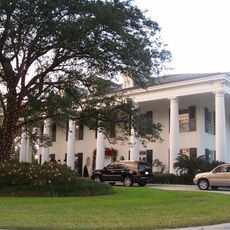
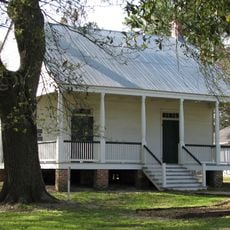
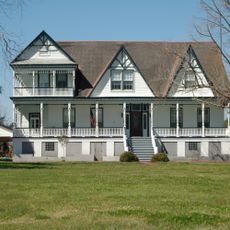
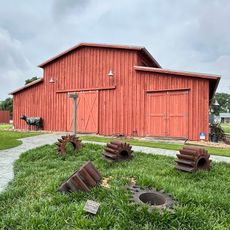
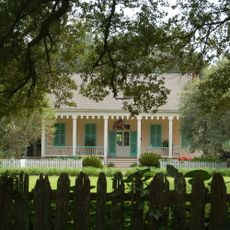
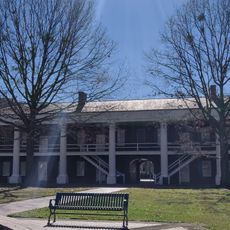
Allendale Plantation is a historic plantation in Port Allen, Louisiana, with roughly 15 preserved wood-frame buildings from the 1800s, including residences, a church, and office structures. The buildings are arranged to show how a working agricultural settlement operated during that period.
In February 1852 Henry Watkins Allen and William Nolan bought the Westover Plantation; in 1855 the land was divided, Nolan kept the name Westover and Allen named his portion Allendale. Allen's holding reached 2,027 acres, 627 of them farmed, worked by 125 enslaved African Americans, and he built his own railroad headquartered in what is now Port Allen. After Allen died in Mexico City on April 22, 1866, the property passed through many owners until the Kahao brothers bought it in 1882 and ran it as a sugar mill into the 1930s.
The name Allendale comes from Henry Watkins Allen, who kept it for his half of the former Westover Plantation after the 1855 division. The site's church was built for laborers, and the office building held the plantation's operations paperwork. The West Baton Rouge Museum has displayed one of the slave cabins, once owned by Allen before 1865, since 1976.
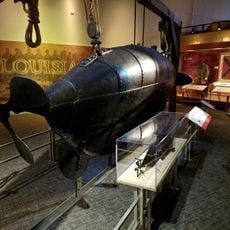
Visitors can see one of the original buildings from the property at the West Baton Rouge Museum, where it is on display with historical context. The museum provides background information that helps visitors understand the structures and their purpose.
After 1908, the property introduced an unusual payment system where workers were paid with merchandise checks instead of cash, a practice that defied federal rules at the time. This token system reveals how operations controlled their labor force.
The community of curious travelers
AroundUs brings together thousands of curated places, local tips, and hidden gems, enriched daily by 94,156 contributors worldwide.