Roseland Plantation, historic plantation site in Faunsdale, Alabama, United States
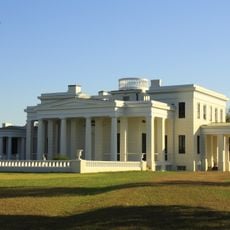
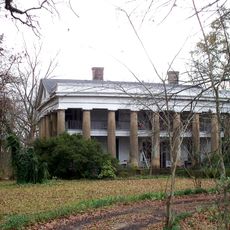
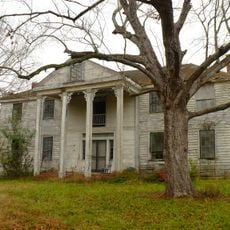
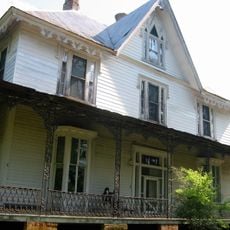
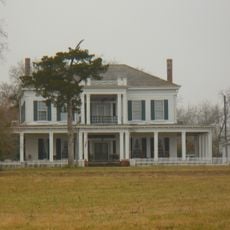
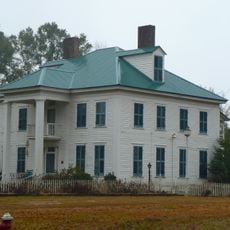
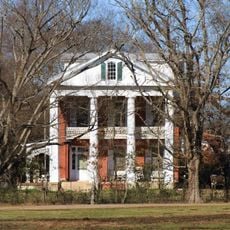
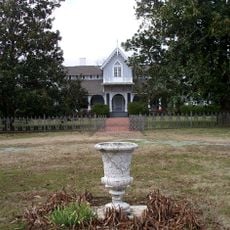
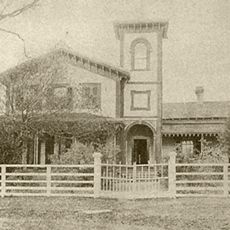
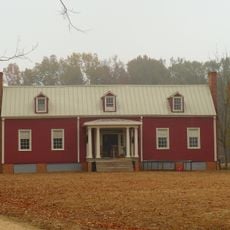
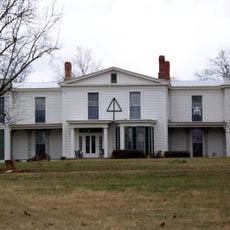
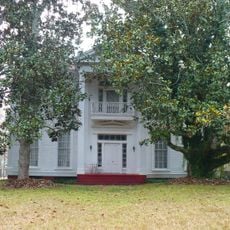
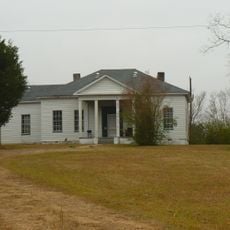
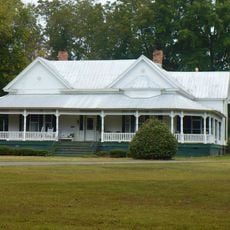
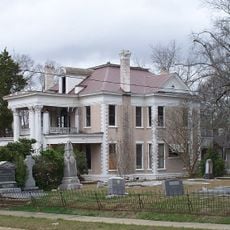
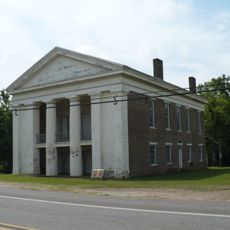
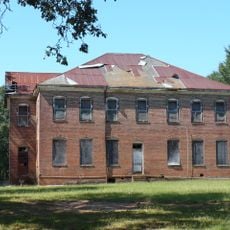
Roseland Plantation is a ruined plantation complex site on a low hill at the end of a long driveway in Faunsdale, Alabama. The main house began as a dogtrot house in 1835, with a two-story Greek Revival frame addition built onto its front in the mid-1850s. The house and most outbuildings have been demolished by neglect; a dairy cooler and the original log kitchen remain.
James Harris Fitts established Roseland as a 1,200-acre plantation in the Canebrake region of Marengo County in the late 1820s. He was murdered by a discharged overseer on July 16, 1832, leaving his eighteen-year-old son Samuel Alston Fitts in charge. By 1860 Samuel had made the plantation a success, with property valued at $95,000 and at least 67 slaves working the land. The site was listed on the National Register of Historic Places on January 20, 1994.
The name Roseland was given by "Judge" James Harris Fitts, who established the 1,200-acre plantation in the Canebrake region of Marengo County in the late 1820s. The Greek Revival addition of the mid-1850s, with its cross-hall and long center-hall, was built for his son Samuel Alston Fitts, who by 1860 held property valued at $95,000 and worked the land with at least 67 enslaved people. The small Greek Revival office known as the "apothecary" was used to dispense medicine to those enslaved workers; it was later moved to the grounds of Sturdivant Hall in Selma.
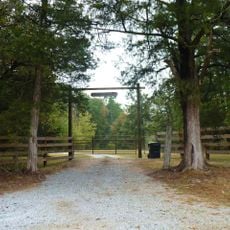
The site lies at the end of a long driveway on a low hill in Faunsdale, reached by local roads; the grounds are overgrown and the main house is in ruins, with only a few walls standing. The original log kitchen and a dairy cooler survive on the grounds. Sturdivant Hall in Selma, where the plantation office and the 1850s seven-seat privy were moved, holds those relocated structures.
The Greek Revival office known as the "apothecary", where medicine was dispensed to the plantation's slaves, was moved off the site to the grounds of Sturdivant Hall in Selma to protect it. A seven-seat privy from the 1850s was donated to the same museum association in 1979 but only relocated there in 2005.
The community of curious travelers
AroundUs brings together thousands of curated places, local tips, and hidden gems, enriched daily by 94,465 contributors worldwide.