Kymulga Mill & Covered Bridge, Historic mill and covered bridge in Talladega County, Alabama.
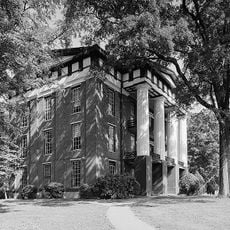
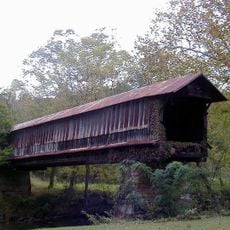
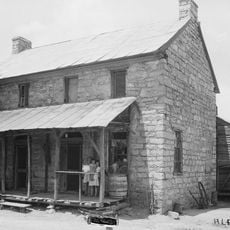
Kymulga Mill is a four-story wooden gristmill built in 1864 beside Talladega Creek, powered by three water turbines that drove its millstones, grain elevator and lights. Just east of it, the Kymulga Covered Bridge, a 105-foot Howe truss of wood and metal built in 1861, crosses the creek on a single span. Two of the mill's five millstone sets are French buhrs.
Kymulga Mill was built in 1864 by German contractor G.E. Morris for Confederate Major George H. Forney, who died at the Battle of the Wilderness before it was finished; his wife let Morris complete it. Union soldiers burned most gristmills in the area, but this one was missed. The Childersburg Heritage Committee bought the mill from Edward Donahoo in 1988, and the city acquired the park in June 2011.
The site shows how people in the 1800s used water power to grind grain for their daily bread and food needs. You can see how the water turned the millstone and what equipment made this work possible.
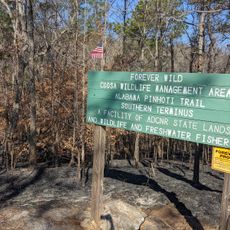
Kymulga Park lies on Grist Mill Road (County Road 46) off State Route 76, about 4 miles northeast of Childersburg. There is an admission charge, and the proceeds go to upkeep of the structures and nature trails. The mill building doubles as gift shop and park office, and guided tours are offered. The covered bridge leads to nature trails north of Talladega Creek.
One of few structures of its kind in Alabama that remains in its original location, showing the rare combination of a working mill and covered bridge together. Many similar buildings were moved elsewhere or have disappeared entirely.
The community of curious travelers
AroundUs brings together thousands of curated places, local tips, and hidden gems, enriched daily by 93,032 contributors worldwide.