Mud Lake Canal, Aboriginal canal in Monroe County, United States.
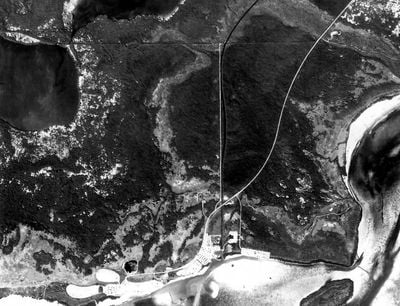
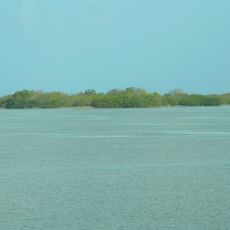
Mud Lake Canal is a prehistoric canoe canal about 3.9 miles (6.3 km) long at Cape Sable in Everglades National Park, near Flamingo. Its dug channel runs southeasterly in long straight sections broken by bends, roughly 10 to 30 feet wide and about 2 feet deep, and bends around the Bear Lake Mounds. It ends in a network of streams on the shore of Snake Bight, and small shell middens lie along parts of the route.
The waterway was constructed by Native Americans roughly 800 to 1200 years ago as part of a larger transportation network. It connected distant island groups and coastal areas, enabling trade and communication across significant distances.
Early white settlers alerted Smithsonian archaeologist Aleš Hrdlička to the canal in 1918; a botanist described it in 1921 and an engineer working on the Homestead Canal did so the next year. Small shell middens lie in places along its route, and the canal bends around the Bear Lake Mounds, another prehistoric site.
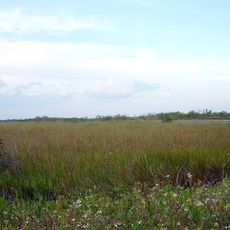
The canal lies at Cape Sable in Everglades National Park, its northwestern end at the southwestern outlet of Mud Lake, north-northwest of Flamingo; it runs southeasterly to streams on the shore of Snake Bight. The route is crossed five times by the 20th-century Homestead Canal and by old and modern alignments of the Ingraham Highway. Portions are overgrown with plant life that differs from the surrounding area.
The canal's route is crossed five times by the 20th-century Homestead Canal and by both old and modern alignments of Ingraham Highway. Small shell middens lie in places along the route, and a major bend carries the canal around the Bear Lake Mounds, another prehistoric site.
The community of curious travelers
AroundUs brings together thousands of curated places, local tips, and hidden gems, enriched daily by 93,631 contributors worldwide.