Aquarius Reef Base, Underwater research laboratory in Key Largo, Florida, US
Aquarius Reef Base is a steel underwater habitat on the seabed at Conch Reef, 62 feet (19 meters) below the surface off Key Largo. Its hull, 1.9 cm thick with 1 cm of insulation, rests on a 116-tonne base plate connected by four pillars filled with 25 tonnes of lead each, giving a total mass of about 300 tonnes. Three compartments—wet porch, entry lock and main living area with six bunks—house four scientists and two technicians.
Built in 1986 in Victoria, Texas, by Victoria Machine Works to a design by Perry Submarine Builders, the habitat was first named George F. Bond after the Navy physician behind SEALAB. Planned for Catalina Island, it was deployed in the U.S. Virgin Islands, repaired in Wilmington after Hurricane Hugo in 1989, and moved to Conch Reef in 1993. NOAA owned it until FIU took over operations in 2013 and ownership in 2014.
Since 2001, NASA has used Aquarius for NEEMO missions, sending astronaut crews to live and work on the seafloor as practice for spaceflight. The habitat's name comes from the zodiac water-bearer, and its original name honoured Navy physician George F. Bond, father of SEALAB and saturation diving.
Aquarius rests on a 116-tonne base plate, its four legs filled with 25 tonnes of lead each and adjustable by about 2 metres to level the habitat on the seabed. Divers enter through the wet porch, a 2.5 by 3.6 metre chamber with a moon pool, storage for dive gear and a hot-water shower. A 42-metre umbilical, 8 centimetres thick, links the habitat to the surface buoy.
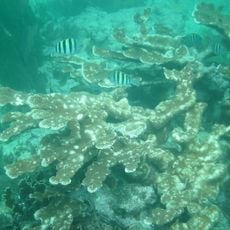
The structure functions as an artificial reef, attracting numerous marine species while researchers can study coral ecosystems continuously. This dual role as both research platform and living habitat makes it a rare example of intentionally created underwater habitats.
The community of curious travelers
AroundUs brings together thousands of curated places, local tips, and hidden gems, enriched daily by 93,590 contributors worldwide.