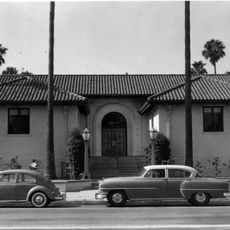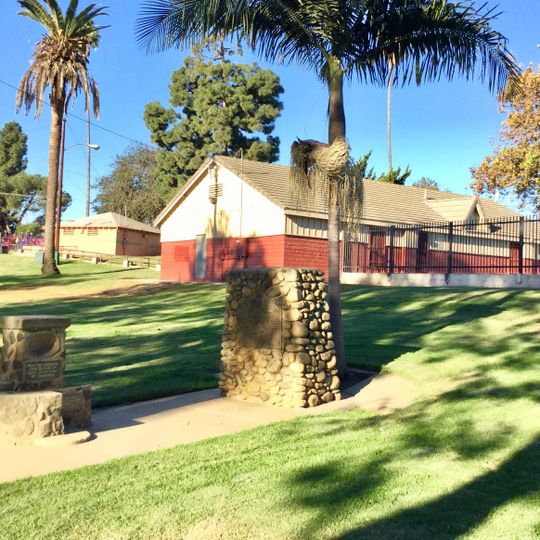
Centinela Springs, Historic spring site in Inglewood, California, US.
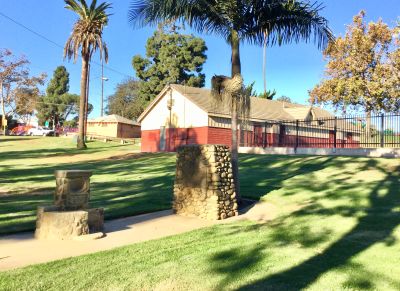
Centinela Springs is a historic spring site in Inglewood, California, where water from the Newport-Inglewood Uplift once surfaced at the head of an arroyo draining to Ballona Creek. The largest spring stood near the present swimming pool in Centinela Park. The springs were developed with excavation and artesian wells, and by 1890 had a daily capacity of 900,000 gallons.
The springs were known to prehistoric people and animals, and the Mexican land grant of 1837 that covered today's Inglewood was named Rancho Aguaje de la Centinela after them. In the 19th century the water irrigated a 140-acre mixed orchard about a mile away and was later piped to a reservoir for Inglewood. By 1936 the water level had dropped 150 feet or more below the surface.
The name aguaje, Spanish for watering place or water hole, comes from the Spanish-Mexican era, and the 1837 Mexican land grant covering today's Inglewood was named Rancho Aguaje de la Centinela, the sentinel of waters, after the springs. The springs were known to the Indians from ancient times.
The largest of the springs fed a reservoir and was pumped under pressure to Inglewood; a later Inglewood water engineer placed it near the present swimming pool in Centinela Park. The water once ran in an earthen ditch to a 140-acre orchard about a mile away, and by 1893 gravity pipes carried it across the townsite. Look for the park's pool area as the rough marker of the main spring.
These springs were among Southern California's most productive water sources over 100 years ago, supplying the rapidly growing region. Their decline in the 1900s shows how urban development transformed natural water sources.
The community of curious travelers
AroundUs brings together thousands of curated places, local tips, and hidden gems, enriched daily by 93,782 contributors worldwide.