Tres Zapotes, Archaeological site in Santiago Tuxtla, Mexico.
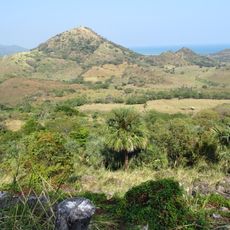
Tres Zapotes is an archaeological site just north of the village of Tres Zapotes, west of Santiago Tuxtla, Veracruz, on the banks of the Río Hueyapan. Its Late Formative core covers about two square kilometres and holds four artificial mounds up to 18 metres high, three of them ringing broad plazas; the fourth lies two kilometres to the northwest. Most of its monumental sculpture is Epi-Olmec.
Founded in the centuries before 1000 BCE, Tres Zapotes became a regional center around 900–800 BCE, roughly when San Lorenzo declined. Unlike La Venta, it was not abandoned around 400 BCE but gradually transformed into the Epi-Olmec culture. In 1939 Matthew Stirling found the lower half of Stela C, whose Long Count date of 7.16.6.16.18 corresponds to 32 BCE; the upper half, found in 1969, confirmed the missing baktun digit.
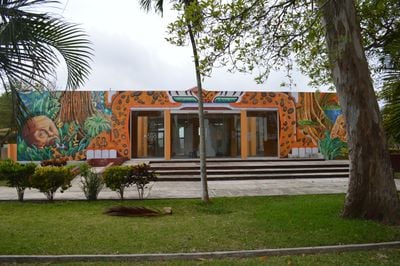
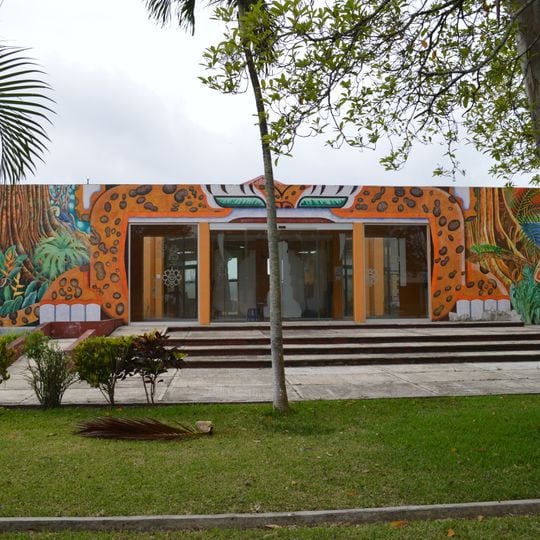
The name Tres Zapotes is Spanish for "three zapotes", referring to the sapote fruit trees of the area rather than to sandals. The site museum, opened in 1974 in the village of Tres Zapotes, keeps a permanent display of Olmec pieces, and its most noted exhibit is Stela C, whose Long Count date bears on the age of Olmec culture.
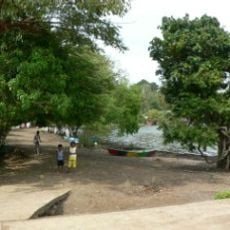
The site lies just north of the village of Tres Zapotes, west of Santiago Tuxtla, on the banks of the Río Hueyapan. The on-site museum, opened in 1974, displays finds from the excavations; the village is reached by road from Santiago Tuxtla. Ground between the mounds is uneven and can be muddy after rain.
The site museum opened in 1974 and was remodeled in 2007, when Olmec tombs were added to the displays. Its most noted piece is Stela C, whose Long Count date of 7.16.6.16.18 (September 3, 32 BCE) was confirmed in 1969 when the missing upper half was found.
The community of curious travelers
AroundUs brings together thousands of curated places, local tips, and hidden gems, enriched daily by 94,131 contributors worldwide.