Castillo de la Real Fuerza, Spanish colonial fort in Old Havana, Cuba
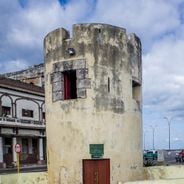
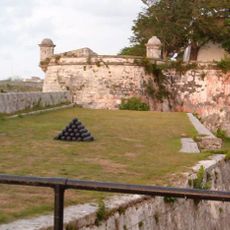
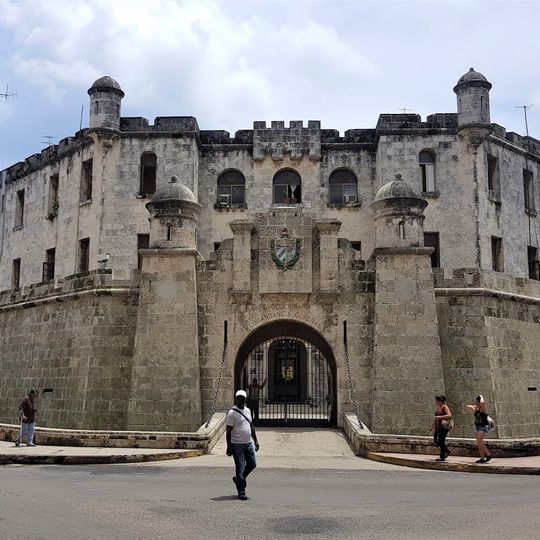
Castillo de la Real Fuerza is a square limestone fort with thick sloping walls and corner bastions, surrounded by a moat once connected to the bay. Its central courtyard is ringed by galleries and tiled roofs, and the tower carries the Giraldilla weathervane. It now houses the Museo de Navegación.
Construction began on 1 January 1558 under engineer Bartolomé Sánchez, after French corsair Jacques de Sores sacked Havana in 1555 and the old Fuerza Vieja was demolished in 1582. Francisco de Calona took over direction from 1562, and the fort was finished in 1577 with slave and French prisoner labour. It served as the governor's residence and later as a navigation museum.
The bronze weathervane on the tower, La Giraldilla, is attributed to Jerónimo Martín Pinzón and is considered the oldest preserved bronze sculpture in Cuba. It is traditionally associated with Isabel de Bobadilla, the first female governor of Cuba (1539–1543), who is said to have scanned the horizon for her husband, the explorer Hernando de Soto. The figure has become a symbol of Havana.
The fort sits in the heart of Old Havana and is easily reached on foot from surrounding streets. Wear sturdy shoes since the stone pathways and stairs can be uneven throughout the complex.
The bronze Giraldilla on the tower is attributed to Jerónimo Martín Pinzón and is considered the oldest surviving bronze sculpture in Cuba. It is traditionally linked to Isabel de Bobadilla, who governed Cuba from 1539 to 1543 while her husband was away exploring.
The community of curious travelers
AroundUs brings together thousands of curated places, local tips, and hidden gems, enriched daily by 94,657 contributors worldwide.